Food service: how will payments be managed in 2026?
Chloé Thévenet
Updated on:
17 August 2026
Share this article
In 2036, payments are no longer made only at the cash register. They are made at the table, on smartphones, online, and often contactless. Restaurant owners, you know better than anyone: managing payments well is not just about collecting money, it's about optimizing the customer experience and your profitability. Discover our comprehensive, practical guide to understanding developments, anticipating expectations, and mastering every step of the payment process.
Payment management: a strategic lever for restaurants
1. New consumer habits to be aware of
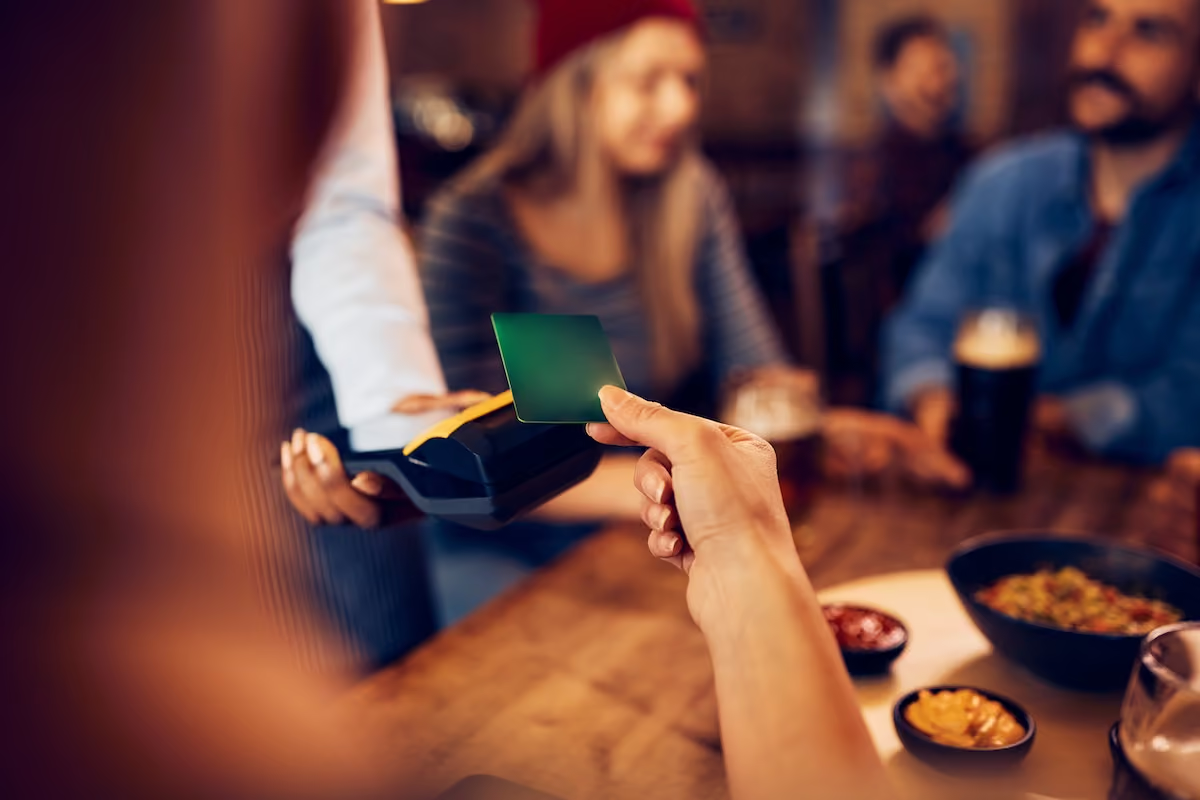
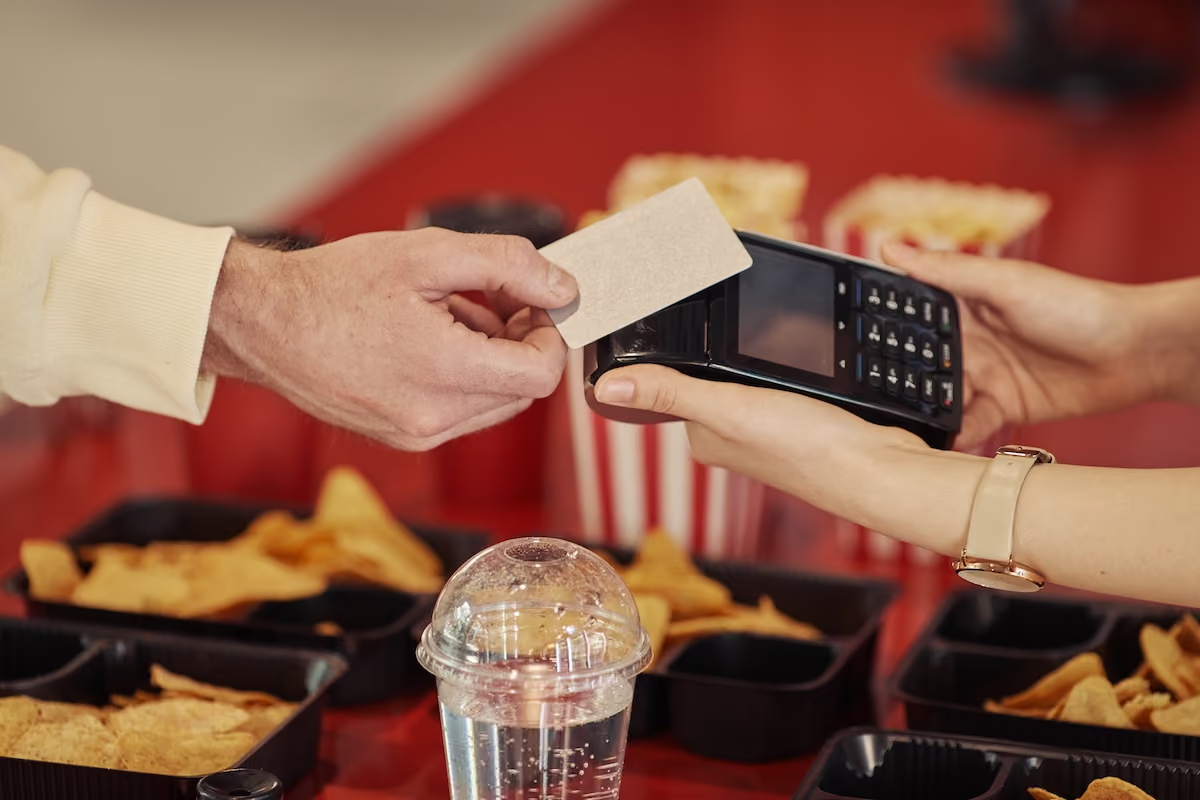
Contactless payment has become the norm. Card, smartphone, connected watch: customers no longer want to have to take out their wallet.
Mobile payments and "Tap to PayTap to Pay"(particularly via staff smartphones or tablets) are booming. They reduce waiting times and increase the number of points of collection: at the table, at the counter, click & collect.
Today's consumers expect speed, fluidity and security. The payment experience has become an integral part of the customer experience. A smooth payment experience means satisfied (and returning) customers.
Are you ready to pay at the table, on your mobile, or even via a personalized QR code? Your customers already are.
2. Concrete benefits for profitability and efficiency
Faster, more controlled payments can really revolutionize your day-to-day operations, both in the dining room and in the kitchen. Here's how technology can have a direct impact on your performance:
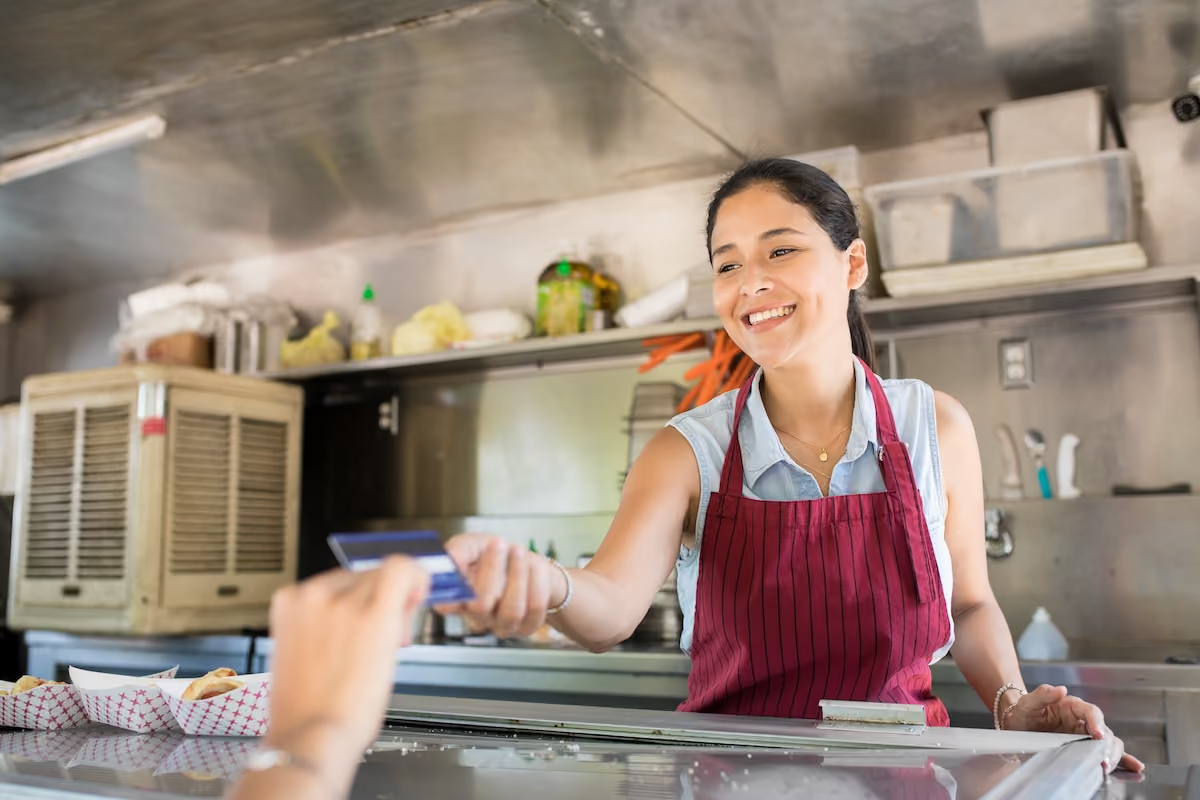
Reduced checkout times: your teams will no longer have to search for change or wait for a slow chip card.
Fewer cash register errors: automation reduces risks and guarantees greater reliability in your cash receipts.
Better customer turnover : the faster you cash out, the faster you free up tables. And what about takeaway service? Every second you save has an impact on customer satisfaction!
Among establishments that have implemented full order-and-payment integration, some restaurant owners have seen a 30% increase in average order value, with the average check rising from €15 to over €20 (internal Innovorder data). These figures reflect the overall integration of the ordering and payment process, not just the payment method itself.
The most commonly used payment methods in restaurants in 2026
The essentials: bank card, restaurant card, cash
Bank cards remain the most popular payment method in France (accounting for 60.7% of all payments, according to the Banque de France), followed by meal vouchers (paper or digital) and cash, which are still holding their ground, especially at fast-food restaurants and in rural areas.
Mobile payments (Apple Pay, Google Pay, Samsung Pay) are following the same trend. Unlike traditional contactless card payments, mobile wallets rely on strong (biometric) authentication and allow payments of up to €300 without any channel-related restrictions, depending on the issuing bank’s settings. For your restaurant, this has practical implications: your terminal must be NFC-compatible and updated regularly.
Each format has its own strategy:
On-site: card or classic luncheon vouchers.
Takeaway: contactless or QR code.
On delivery: online or mobile payment.
Meal Vouchers and Vacation Vouchers: How to Accept Them?
Meal vouchers are a common form of payment in urban areas, particularly for lunch. To accept them, you must register with the major issuers: Edenred, Sodexo, Up (Chèque Déjeuner), and Bimpli. You can do this directly through each issuer or through the National Commission for Meal Vouchers (CNTR).
The digital TR card simplifies management: because it is interoperable, it allows merchants to accept all issuers through a single terminal. The transaction fee ranges from 1% to 5%, depending on the issuer and the transaction volume.
For vacation checks, registration is handled through the National Agency for Vacation Checks (ANCV), primarily for establishments that offer on-site services.
Species: Legal Requirements and Practical Management
In France, euro bills and coins are legal tender: you are required to accept them. Refusal without a legitimate reason is punishable by a fine of €150 (Article R642-3 of the Penal Code). The legal limit for cash payments in a transaction between an individual and a business is set at €1,000 (Article L112-6 of the Monetary and Financial Code).
From an operational standpoint, the automatic change dispenser is the most effective solution to cash-related challenges: it automates change dispensing, reduces cash discrepancies, and secures your funds without tying up your staff.
QR Codes and Table-Side Payment: The 2026 Standard
Paying via QR code at the table has gone from being an innovation to a standard expectation for customers in sit-down dining. The concept is simple: each table has a unique QR code. The customer scans the code, views the menu, places an order, and pays using their smartphone—without having to wait for the server.
Operating profits are measurable:
- Faster table turnover: Checkout no longer depends on staff availability.
- Native split bill: Each guest pays their share without any manual steps.
- Digital tips: A tip prompt is built into the experience, which improves staff compensation.
- Easy reordering: The customer can place a new order without calling the server.
Italian Queen, a downtown franchise, reported a 10–15% increase in revenue from repeat orders solely due to table-side ordering via QR code. The process is straightforward: a customer already seated sees a dessert or drink being served, scans the QR code, and places an order without having to wait for a server to become available.
How much does each payment method cost? Fees to be aware of
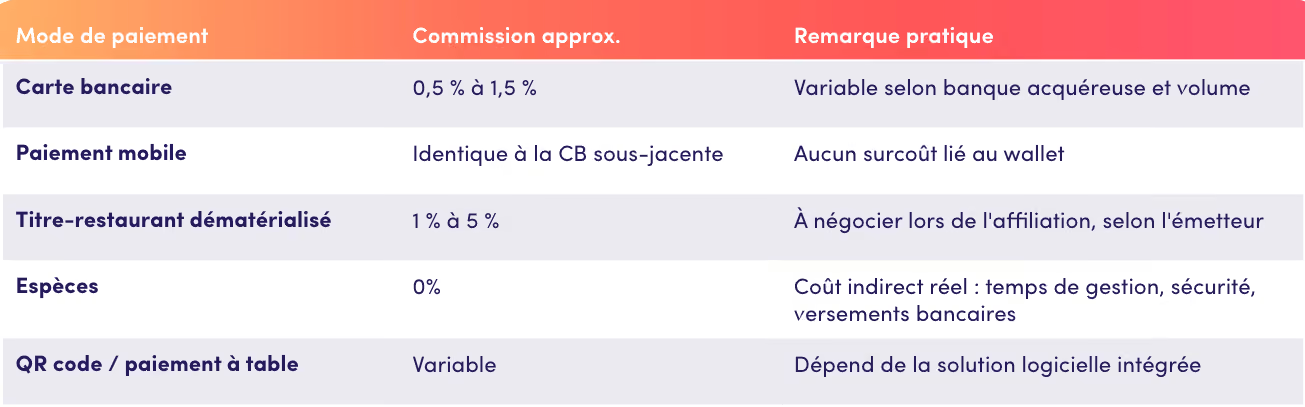
Choosing a payment method isn't just about how it's used: each option has a cost that you need to factor into your financial planning. Here are the approximate ranges observed in the market in 2026 (indicative rates, which vary by provider, volume, and negotiated contract):
The "zero commission on cash" claim is misleading: the time spent counting cash, securing the cash on hand, and making deposits represents an indirect cost that should not be overlooked in your analysis
Legal compliance! In France, your solution must be NF525 or LNE certified to guarantee data inalterability.
Cash register VS POS only
A standalone POS terminal is a good place to start. But a connected touchscreen cash registeris essential in 2026: all-in-one, intuitive, connected to your management, delivery, and loyalty tools.
Centralizing your payments will save you time and energy every day.
The specifics of multi-site payment management
To manage multiple sites, you need centralized tracking of cash receipts, with multi-site dashboards: to compare performance, analyze peaks in activity, or simply supervise your business remotely.
Learn about the best payment management solutions in 2026
Connected cash register
Today, an all-in-one cash register does much more than calculate the bill. It becomes the heart of your establishment. It connects orders, manages deliveries, monitors loyalty and centralizes all payments. For you, this means: less handling, greater fluidity and a clear view of your performance.
IO Pay: a fast, secure payment solution
IO Payis the payment solution developed by Innovorder specifically for restaurateurs. It enables you to accept all payment methods (credit card, mobile, vouchers, etc.) from a single terminal. Fluid, mobile and intuitive, it also lets you track your transactions in real time, reducing errors and saving precious time on a daily basis.
According to a survey conducted by the European Central Bank between 2024 and 2025, 60% of consumers consider it important to be able to pay in cash. Cash is therefore not yet obsolete. The automatic coin dispenser allows you to accept coins and bills without stress or error. By automating cash collection, you limit cash discrepancies, secure funds, and save valuable time at closing. This is a real plus for establishments that still regularly handle cash.
Centralize all payment methods in a single interface
Imagine: credit cards, cell phones, vouchers, checks, cash... all managed in a single dashboard. This is the reality for many establishments. This centralization offers unrivalled convenience to managers and franchisees, who gain greater visibility, control and responsiveness.
Digitizing for automation
A good system enables automated payment collection, with less training for staff, fewer errors, and, above all, real-time monitoring of cash flow in your back office. You can manage better, train faster, and steer more accurately.
Safeguarding and staying compliant made easy
Tax compliance(NF525, LNE), traceability, data archiving: don't take any risks. A good system allows you to be 100% compliant, effortlessly. It also gives you peace of mind in the event of a control or audit, or simply for your own reporting.
In 2026, managing payments in your restaurant will no longer be a simple logistical issue, but a necessity. Fast, smooth, reliable: that's what your guests expect. And you have everything to gain. Whether it's improving the customer experience, speeding up service, reducing errors, or simplifying multi-site management, the right payment tools will transform your daily routine in a lasting way.
FAQ: Payment Methods in the Restaurant Industry
Am I required to accept cash at my restaurant?
In principle, yes. Euro bills and coins are legal tender in France. Refusing to accept cash without a legitimate reason is punishable by a fine of 150 € (Article R642-3 of the Penal Code).
What is the transaction limit for contactless payments made with a card or a mobile device?
Contactless payments with a bank card are limited to €50 per transaction. Payments via mobile wallets (Apple Pay, Google Pay) use strong (biometric) authentication and can be up to €300, depending on the settings established by the issuing bank.
How can I accept meal vouchers at my establishment?
You must register directly with the issuers (Edenred, Sodexo, Up, Bimpli) or through the CNTR. The digital TR card is interoperable: a single terminal is sufficient for all issuers. The commission ranges from 1% to 5%, depending on the issuer and your transaction volume.
Does my point-of-sale software need to be certified?
Yes. As of January 1, 2018, all point-of-sale software used by a VAT-registered business in France must be NF525- or LNE-certified (2016 Finance Act).
Does paying with a QR code require any special equipment?
No. The QR code at the table works through the customer's smartphone. On the restaurant's end, a compatible software solution is required to generate QR codes for each table and centralize the orders and payments received.
-
Need help choosing the best payment solution for your business? Innovorder's experts are on hand to guide you, with tools perfectly adapted to your needs.
"With 20 years' experience working for some of the world's largest foodservice groups, I'm helping the sector with its digital transformation through innovative digital solutions."
"With solid experience in developing key accounts, I'm supporting the digital transformation of the foodservice sector by proposing innovative digital solutions to optimize operations."