How can you avoid cash register errors in your restaurant?
Chloé Thévenet
Updated on:
26 June 2026
Share this article
There are many reasons for a cash register error, but the result is always the same: you end up pulling your hair out when it's time to do your books. So you might as well try to minimize them!
To save you from this and especially to facilitate the monitoring and management of your business, Innovorder has studied the subject. In this article, we give you some tips to avoid cash register errors in your restaurant in order to manage your business serenely.
The Cash Register Error
Cash register errors—every restaurant owner’s worst nightmare—are well worth taking a few minutes to discuss. Definition, causes, penalties—you’ll learn everything there is to know!
Definition
Let's start this article with the basics: the definition of a cash error in accounting terms. It is simply the difference between the theoretical cash balance and the actual cash balance. There are two possible explanations for this difference: theft or a cash-handling error.
You will notice this discrepancy during the cash-out process using the cash register Z-report, a document that summarizes the day’s sales and total revenue. If the amount on the Z-report differs from the amount in the cash drawer, there is a cash error that you must include in your accounting reports—as a credit to the account for overages and as a debit to the account for shortfalls.
The causes
Whether the cash register error is due to theft or a mistake made during the checkout process, it is always attributable to a human being.
It may work in the company's favor when the amount collected is higher than the price of the item sold, but it can also work in the customer's favor. The cashier may very well have forgotten to ring up one of the items purchased, entered the wrong amount, or given too much change for a cash payment.
Liability for cash register errors
Whenchecking tills daily, if an error is found, it's important to determine responsibility. However, restaurateurs cannot legally deduct the missing amount from their employees' wages, nor can they offset this loss against tips. Cash register errors can have many origins, and are not necessarily the fault of employees. It is therefore illegal to pass these losses on to employees, which could expose the employer to legal risks.
However, if concrete, official evidence shows that the checkout error was deliberate, this constitutes professional misconduct or gross negligence. In such a situation, disciplinary action, including dismissal of the employee, may be considered. Depending on the seriousness and the amount involved, it may be necessary to involve the police. Depending on the evidence and the severity of the act, a complaint could also be filed.
The sanctions
If the cash register errors are repeated or if the amount is high and has a significant impact on your establishment's finances, here are the penalties you can apply:
Issue the employee at fault a written warning or reprimand, which you must send by certified mail with return receipt requested. This document is valid for 3 years.
demote him/her in the hierarchy of your institution or transfer him/her,
proceed with a disciplinary layoff,
to dismiss him/her for professional inadequacy or for serious misconduct in the event of theft.
Under no circumstances should you impose a financial penalty. The Labor Code strictly prohibits employers from reducing an employee’s salary or deducting the amount of the error from their paycheck.
Solutions to avoid cash register errors
To avoid checkout errors—or at least reduce their number—there are several steps you can take. We've listed them for you!
Equipment to limit cash register errors
The cash register
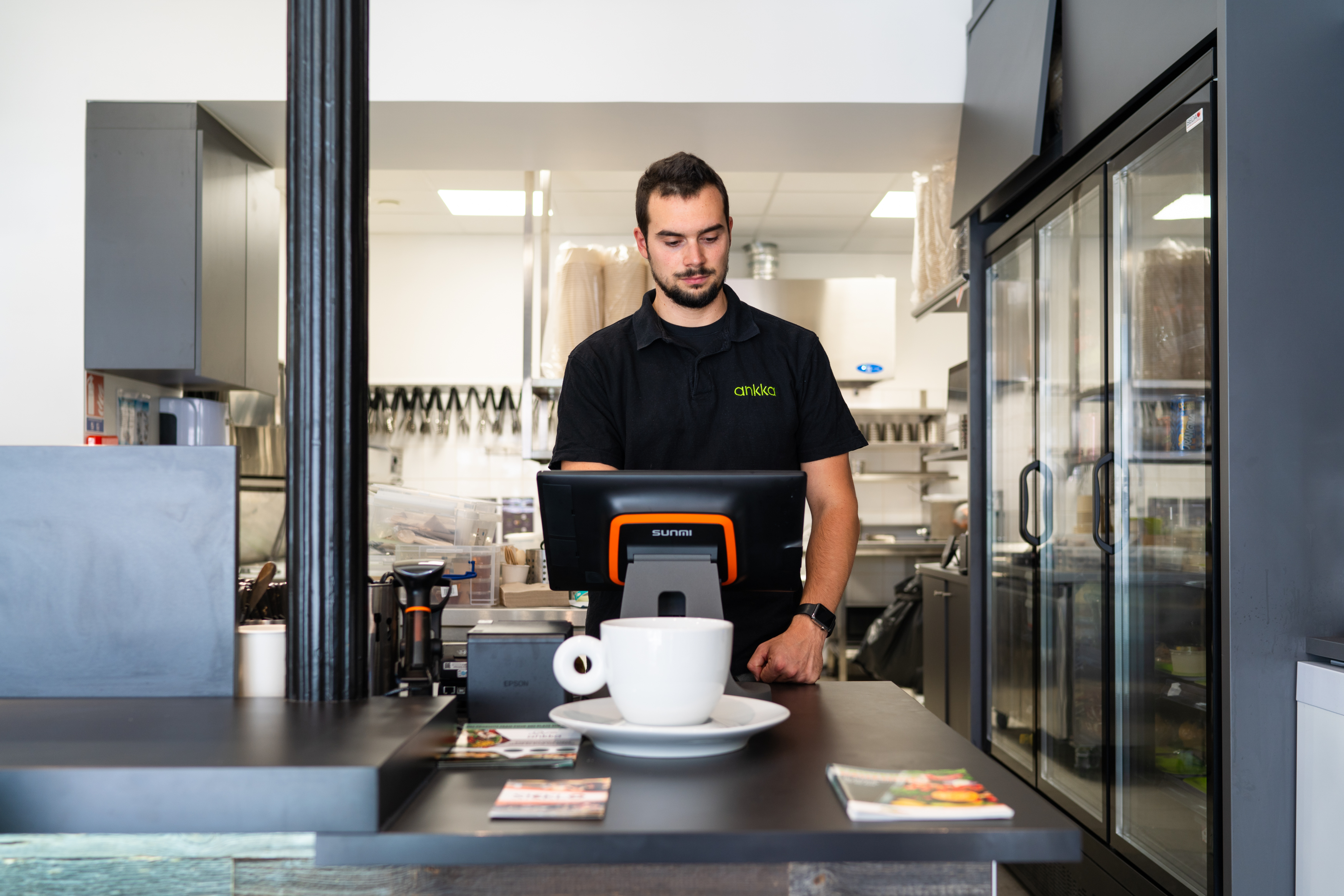
The best way to avoid cash register errors is to use a touchscreen cash register like the one developed by Innovorder. It is NF525-certified and therefore meets the security, tamper-proofing, archiving, and retention requirements of the anti-VAT fraud law. This makes it easier to monitor transactions and ensures the security of your cash register. It also simplifies the management and analysis of your business as a restaurant owner.
This type of point-of-sale solution allows you to significantly reduce the risk of errors when giving change or processing payments. Prices are stored in the point-of-sale software. This helps prevent anyone from entering the wrong price at checkout. When customers pay in cash, the amount to be returned is clearly displayed on the touchscreen POS terminal.
Thanks to its many features, the Innovorder cash register is already making life easier for hundreds of restaurant owners.
"My managers appreciate being able to easily close the cash register in the evening thanks to the self-checkout function of the cash register". Anthony, Ankka franchisee in Grenoble
Even with the best cash register system, mistakes can happen easily. You or one of your employees might mix up two coins or give back one bill instead of two.
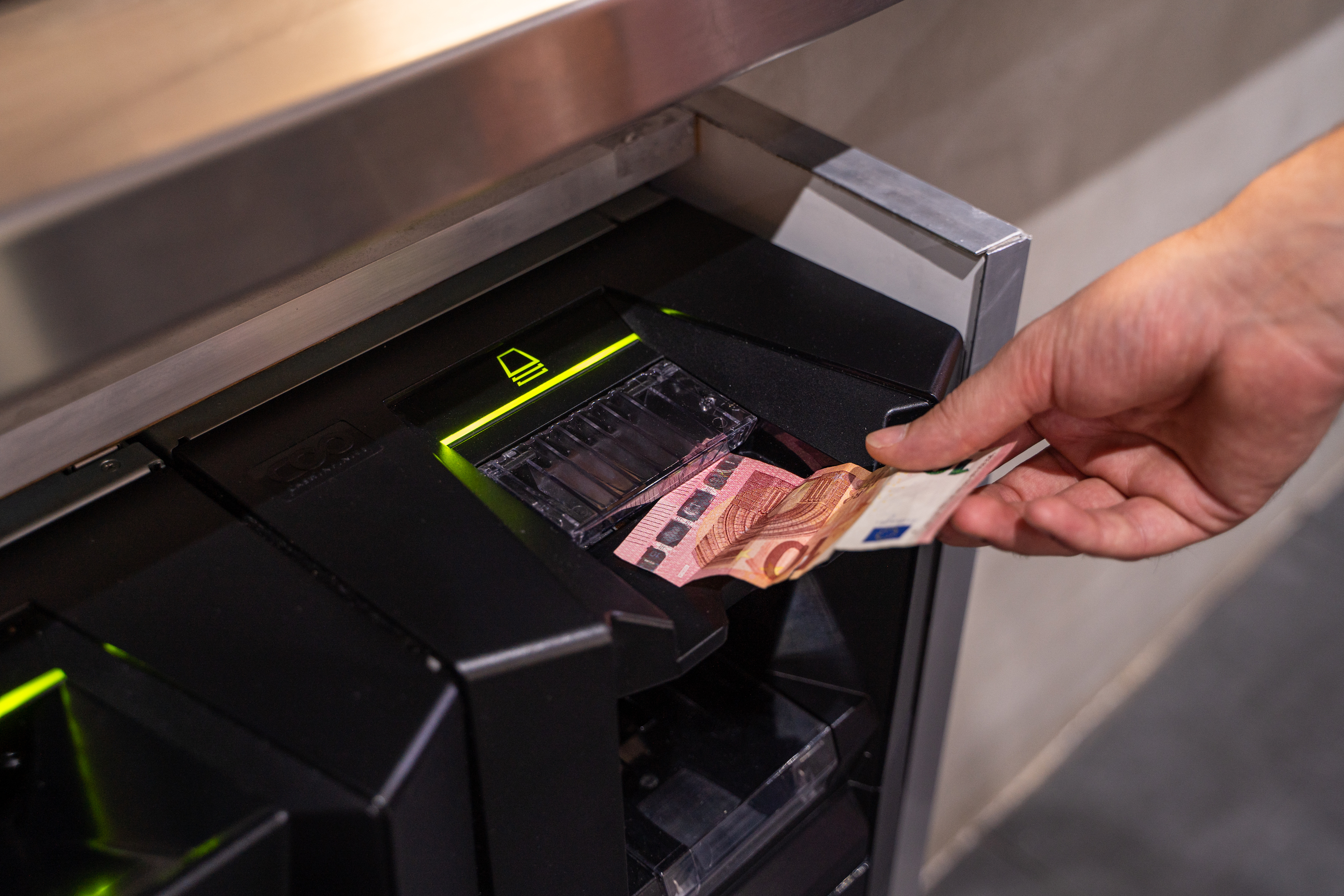
To avoid this kind of disappointment, you can install an automatic coin dispenser. This way, when a customer pays in cash, they insert their coins and/or bills into the machine, which then dispenses change without the employee behind the register having to handle any cash.
Once set up, this tool becomes absolutely indispensable, especially if your customers are used to paying in cash, as is often the case at fast-food restaurants and bakeries.
Another positive point is that with an automatic coin-operated machine, your employees are less stressed and can focus on the customers.
"Since my coin acceptor is synchronized with my cash register, all my transactions are accounted for without error at the end of the day and I save 30 minutes a day on opening and closing the cash register." Peggy Garnier, BCHEF franchisee in Perpignan
The fewer cash transactions and people involved, the lower the risk of cash register errors. One solution, therefore, is to prioritize payment by card or by phone.
You can certainly encourage your customers to stop paying in cash and switch to payment methods that are less risky from an accounting standpoint, such as:
The order terminal facilitates payment by card or telephone and also allows for more customers to be collected.
The staff
As mentioned at the beginning of this article, cash register errors are always caused by a person. You can therefore take steps at this level to prevent them.
You can start by limiting the number of people authorized to handle cash receipts. Next, assign responsibility for a specific cash register to a particular employee to prevent any employee from taking it over. Also, be sure to clearly assign roles so that each employee manages their own cash register.
By empowering your staff and limiting the number of employees who handle cash, you reduce the likelihood of discrepancies between the actual and expected cash on hand at the end of the day.
Training staff on the point-of-sale software is also crucial. Mastering the software will drastically reduce the risk of errors.
You can also customize your cash register access. By creating cashier accounts, you can assign roles to each operator:
cancellation of orders,
modification of the catalog,
closing of reports, etc.
-
Let an expert guide you in equipping your establishment with the cash register software or automatic coin acceptor best suited to your needs.
"With 20 years' experience working for some of the world's largest foodservice groups, I'm helping the sector with its digital transformation through innovative digital solutions."
"With solid experience in developing key accounts, I'm supporting the digital transformation of the foodservice sector by proposing innovative digital solutions to optimize operations."


.jpeg)