Fast food: what equipment do you need to get started?
Noémie Daniel
Updated on:
19 January 2026
Share this article
Behind every hot burger or crispy fries served lies carefully selected equipment, thoughtful layout, and well-organized teams. Kitchen, dining room, checkout, digital: every choice of equipment has a direct impact on your operational efficiency, profitability, and customer experience.
To leave nothing to chance, here is a practical guide to the essential equipment you need to launch your fast-food restaurant in the best possible conditions.
Essential equipment for a fast-food kitchen
Cooking
This is the heart of your business. The cooking equipment you need depends primarily on what you offer: burgers, tacos, bowls, pizzas, wraps—what's on your menu?
Among the most common equipment:
Professional griddle or grill for meat and vegetables,
Single or double fryer to handle peak service times,
Professional oven (convection or pizza oven depending on your concept),
Cooking plates or induction hobs for quick cooking.
Your goal is simple: to be able to serve quickly and consistently without overburdening your staff.
Preservation and storage
A fast-food restaurant that works well is, above all, a kitchen where everything is in its place. When staff know exactly where to find each ingredient, service becomes smoother and more relaxed.
To do this, it is essential to plan for:
Professional refrigerators and freezers tailored to your volumes, Refrigerated tables to keep ingredients close at hand during service,
Shelves and racks for clear and well-organized storage.
A well-thought-out layout avoids unnecessary back-and-forth trips and limits errors during busy periods.
Small preparation equipment
Often overlooked, small equipment plays a key role in your kitchen and the pace of your service. These everyday tools save you precious minutes.
Essential equipment includes:
Vegetable-cutting robots to work faster without sacrificing quality.
Mixers and blenders for sauces, drinks, or homemade preparations,
Gastronorm containers, measuring cups, and scales to maintain consistent portions.
Professional knives and utensils suitable for intensive use.
This ensures that your teams are efficient, service is fast, and customers are satisfied.
Health and safety
In fast food, hygiene and safety are essential requirements. To work with peace of mind and comply with regulations, remember to:
A washbasin with non-manual control,
A suitable professional hood,
Fire extinguishers and safety devices,
Cleaning equipment that complies with HACCP standards.
By complying with these standards, you show your customers that you care about their health and that your establishment is reliable.
Designing the store and customer journey effectively
The furniture in the room
Tables, chairs, benches, and bar tables must be sturdy, easy to clean, and suitable for high turnover.
Keep in mind that furniture also contributes to the atmosphere and identity of your fast-food restaurant, whether it's modern, street food, premium, or minimalist. When chosen well, furniture facilitates movement and makes the experience more enjoyable for your customers while simplifying the work of your teams.
The customer journey, from order to pickup
A well-designed customer journey reduces friction and makes the service more seamless.
Plan ahead:
A clear entrance that naturally guides your customers,
A clearly legible control panel to avoid hesitation,
A smooth flow between ordering, preparation, and pickup.
The cash register and ordering system
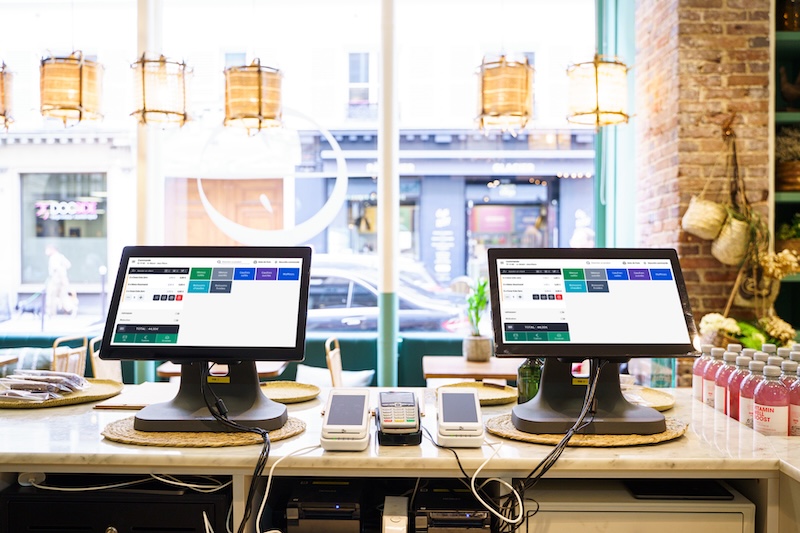
Today, a connected cash register is an essential tool for your fast-food restaurant. It helps you to:
Quickly manage all payments, whether by credit card, contactless, meal vouchers, or mobile payment.
Centralize orders (on-site, takeout, or online),
Track your sales in real time to know exactly what's working.
More than just a tool for taking payments, it's a real dashboard that allows you to manage your business on a daily basis, anticipate needs, and stay in control even during rush hours.
Digitizing your fast-food restaurant to increase efficiency
Centralize management with a connected cash register
A connected cash register allows you to track performance, analyze sales, optimize inventory, and adjust staffing levels according to peak activity periods. You save time and gain visibility.
In practical terms, this allows you to anticipate shortages, identify the most profitable products, and better organize your schedules. You will no longer have to manage your business on instinct at the end of the day.
Automate order taking
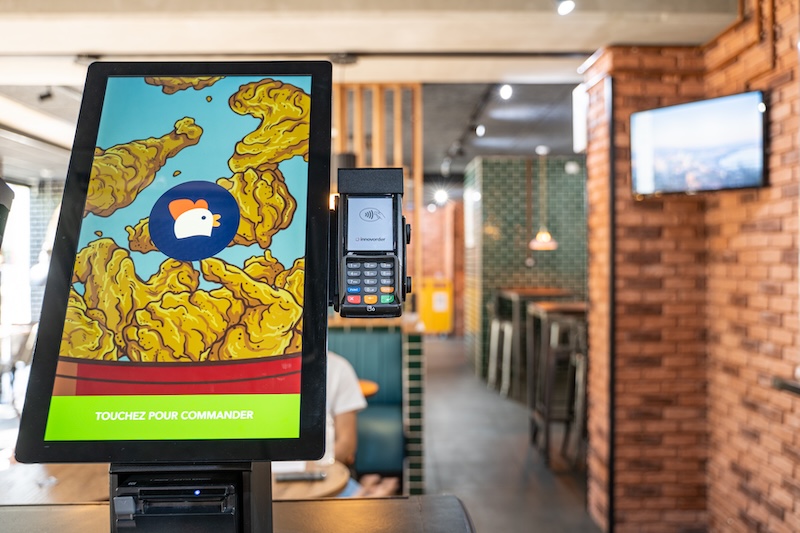
Order terminals, Click&Collect, QR codes on tables: by adopting these solutions, you can streamline service, reduce errors, and increase average basket size, while also reducing the workload for your teams.
You can also count on them to reduce congestion at the counter during peak hours, improve order turnover, and offer a faster experience, which will be appreciated by an increasingly busy customer base.
Leveraging data to better manage your business
Which of your products are the most profitable? When are you busiest? Only data can give you accurate answers to these questions and help you make better decisions based on facts, not intuition.
Take the timeto analyze your sales. This will allow you to adjust your schedules, refine your menu, or highlight your best-selling products, while limiting waste and unnecessary costs.
Improve customer experience and revenue
Less waiting, more fluidity, more autonomy: digital technology improves customer satisfaction and promotes loyalty.
The clearer and faster the process, the more comfortable customers feel. They are then more likely to return and order more. The result: a more enjoyable experience, a more modern image, and a natural increase in sales.
What budget should you set aside for equipping your fast-food restaurant?
Making the right choice between new and used equipment
New equipment offers comfort, guarantees, and peace of mind, while used equipment significantly reduces the initial investment. Many restaurant owners combine the two to optimize their budget without sacrificing quality.
Our advice: reserve new equipment for strategic items (cooking, refrigeration, cash registers) and be more flexible when it comes to furniture and small equipment. Also remember to check the condition, origin, and availability of spare parts before purchasing any secondhand items.
Finance your equipment without tying up your cash flow
Credit, leasing, rental with option to purchase—several solutions are available to you, allowing you to equip yourself without straining your cash flow, especially for the most expensive equipment.
These solutions allow you to spread expenses over time and preserve cash flow for other key areas, such as recruitment, communication, or the first few months of operation.
Where can you buy fast-food equipment?
Specialized CHR suppliers, manufacturers, reconditioners, or professional platforms: take the time to compare, request demonstrations, and check the after-sales service.
A good supplier does not just sell equipment: they advise and support you over the long term, which is particularly important in the event of a breakdown or changes to your business.
By choosing the right equipment and organizing your spaces intelligently, you provide your teams with the conditions they need to work calmly and your customers with a fast and pleasant experience. In short, you put all the odds in your favor to succeed, right from the very first services.
-
Not sure where to start when it comes to equipping your fast-food restaurant? Our Innovorder experts will guide you in choosing the right equipment for your concept, optimizing your space, and integrating digital solutions that will save your teams time.
"With 20 years' experience working for some of the world's largest foodservice groups, I'm helping the sector with its digital transformation through innovative digital solutions."
"With solid experience in developing key accounts, I'm supporting the digital transformation of the foodservice sector by proposing innovative digital solutions to optimize operations."