How to optimize the management of leftovers in foodservice
Updated on:
04 November 2025
Share this article
Behind every unfinished tray or discarded dish lie costs, wasted resources... and considerable room for improvement.
Beyond waste, managing leftovers represents a major economic, environmental and social challenge for the foodservice industry. Reducing food waste doesn't just mean doing something for the planet: it also means optimizing your purchases, improving guest satisfaction and boosting your overall performance.
Chefs, managers, kitchen supervisors: you have a key role to play. So how can you turn those leftovers into a performance lever? Follow the guide, as we share with you concrete, effective solutions for taking action now.
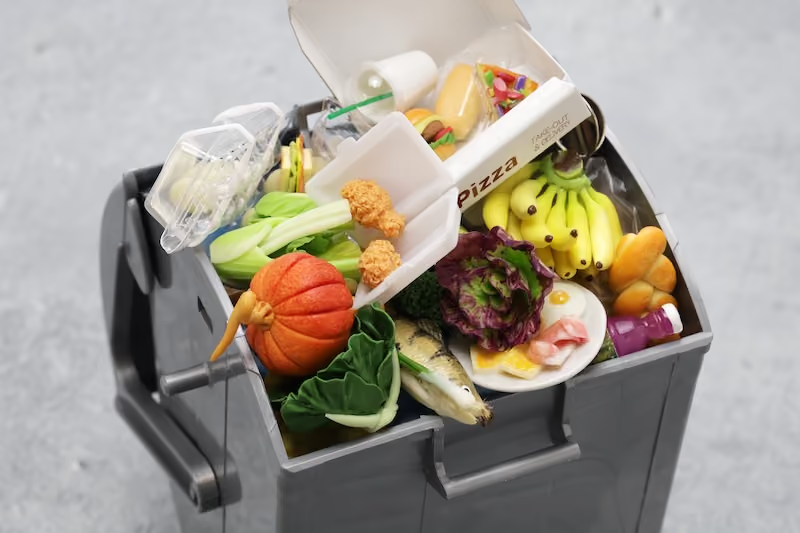
Managing food leftovers is not just a question of common sense, it can also be financially attractive for your establishment. In the catering industry, it is estimated that between 10 and 20% of prepared food ends up in the garbage can. In other words, a significant proportion of your budget literally goes to waste:a waste of resources and a significant loss of earnings .
Social and environmental impact
But beyond the financial issue, managing food waste also has a direct impact on the planet and on society. Less waste means less waste to process, and therefore fewer greenhouse gas emissions linked to its decomposition. It's also a concrete way of strengthening the sustainability of your business.
And let's not forget the human aspect: by redistributing your surplus food, you're helping to combat food insecurity, a gesture of solidarity that is reminiscent of the values of the foodservice sector.
Despite the importance of the fight against waste, there are a number of obstacles that can hamper efforts to reduce food waste in foodservice. Here are the ones you're likely to encounter most often.
Flow organization problems and planning errors
One of the main obstacles to effective management of leftovers is the organization of food flows and meal planning. If the quantities served do not correspond to actual demand, you run the risk of ending up with uneaten surpluses. To avoid this, rigorous supply management and more precise menu planning are essential. This enables you to adjust quantities to better meet actual needs, without producing too much or too little.
Overproduction and rigid food planning
Sometimes, for fear of running out, the temptation is to overproduce. And that's how leftovers accumulate, an excessive quantity of food that often ends up being thrown away. On top of this, an overly rigid food plan can result in an offer that doesn't match the specific preferences or needs of your guests. The solution? Adapt your menus according to guest feedback and consumer trends. By being flexible and adapting to real needs, you can avoid unnecessary overproduction.
Diners' habits and lack of awareness
Diners' habits play a key role in the management of leftovers. Often, waste simply stems from a lack of awareness of the environmental impact of these behaviors. That's why raising awareness not only among your guests, but also among your staff, is crucial to bringing about lasting change. Organizing food waste awareness campaigns in your establishment can have a real impact on diners' attitudes and teams' commitment to managing leftovers.
What regulations govern the management of food scraps?
The management of food scraps is governed by a series of laws and recommendations designed to limit waste and promote the recovery of food waste.
Sorting biowaste and legal obligations
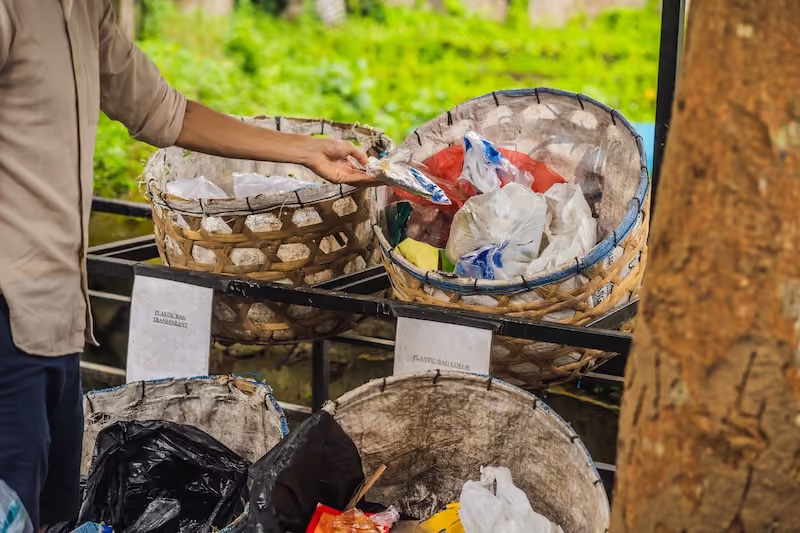
Foodservice establishments are required to sort bio-waste at source. This includes separating food waste destined for recovery(composting, methanization) from that to be disposed of in the conventional way. Proper sorting helps to better manage waste and reduce our ecological footprint.
ADEME recommendations for optimal management
ADEME, the French Environment and Energy Management Agency, provides a number of practical recommendations for optimizing food waste management. These recommendations include improving stock management, reducing portions served and setting up composting programs. They provide an excellent framework for structuring your waste reduction actions.
Redistributing surplus food: health and legal requirements
The redistribution of surplus food is governed by strict health standards to guarantee the safety of those receiving the donations. These rules mainly concern the preservation, packaging and transportation of foodstuffs:
Perishable products, such as meats and dairy products, should be stored at temperatures below 4°C to avoid bacterial proliferation,
Prepared meals must be stored in airtight containers and must not be redistributed more than 24 hours after preparation,
Ready-made meals must be packaged in airtight boxes or trays, suitable for food preservation and clearly labeled,
For fresh or perishable products, vehicles equipped with refrigeration or thermal insulation are required to transport them ideally within 24 hours of preparation,
Foodstuffs must still be edible and not have reached their expiry or minimum durability date.
Practices may also vary according to local standards or the specific recommendations of bodies such as theAgence nationale de sécurité sanitaire de l'alimentation (ANSES ) or theAgence de l'environnement et de la maîtrise de l'énergie (ADEME). These agencies provide protocols and guides to ensure sound and responsible management of surplus food.
Concrete solutions for optimizing leftover management
There are many practical ways to reduce and recycle food leftovers. Here are a few simple actions you can take in your restaurant.
Measuring food waste and its cost
Before reducing leftovers, start by measuring the extent of waste. Gathering data on the amount of food thrown away each day, for example via a leftover weighing system, helps you better understand which parts of the meal are wasted the most and why.
It's just as important to quantify the overall cost of this waste, which goes beyond raw materials and includes waste management (transport, processing, etc.). Knowing these costs will enable you to identify potential savings and release a budget to reinvest in your menus or optimize your services.
Adjust portions and customize menus
The first step in reducing leftovers is to adjust the portions served according to actual demand. For example, in a school restaurant, offering smaller quantities with the option of asking for more can prevent overproduction. What's more, personalizing menus according to guests' preferences helps to better meet their needs, and thus limit leftovers.
Recovering leftovers: composting, methanization and donations
Once portions have been adjusted, recycling leftovers is a solution not to be overlooked. Food scraps can be composted or methanized to produce energy. The redistribution of surplus food, via partnerships with associations, is another avenue worth exploring to avoid waste while meeting a social need.
Raising awareness of waste management among staff and guests
Have you thought about involving your teams in your fight against food waste? This approach is essential. It involves regular training on waste management, portion reduction and the importance of the quality of meals served. Diners can also play a key role, which is why it's important to make them aware of the impact of their behavior.
How can you use digital tools to manage leftovers?
Digital tools enable more precise and efficient management of food leftovers. Here's how you can use them.
Collection and analysis of production and consumption data
Collecting data on meal production and consumption enables you to better understand where leftovers come from, and adapt your practices accordingly. Inventory and order management tools, combined with meal tracking systems, provide this information in real time.
Digital tools to adjust purchases and plan menus
With specialized software, you can fine-tune your purchase planning according to consumption forecasts. These tools analyze the habits of your guests and automatically adjust the quantities to be ordered, thus limiting overproduction and avoiding unnecessary surpluses.
Monitoring indicators for efficient, sustainable management
To ensure optimal management, rely on key indicators such as the wastage rate or the amount of waste generated per meal. Regular monitoring not only helps you to assess the effectiveness of your actions, but also to set realistic targets for continually improving performance and sustainably reducing waste.
Turning leftover management into a strategic advantage
By reducing food waste, you're not just complying with ecological and social standards. You're turning this approach into a real strategic advantage.
Lower waste treatment costs
By reducing the quantity of leftovers, you directly reduce the costs associated with waste treatment, in particular the management, transport and recovery of bio-waste. More optimized management of these flows means significant savings.
Integration into CSR strategy to stand out from the crowd
What's more, reducing waste can fit perfectly into your CSR strategy. It's an excellent way to stand out to your partners and guests, who are increasingly sensitive to environmental and social issues. It shows that your commitment goes beyond mere economic objectives.
Image enhancement for guests and partners
By taking concrete action to limit food waste, you improve your image. This responsible, sustainable approach strengthens the loyalty of your guests and attracts new customers, while consolidating your relationships with existing partners.
By optimizing the management of food leftovers, you not only reduce your costs, but also contribute to a positive environmental impact and a better experience for your guests. By tracking indicators, using real-time data and appropriate technologies, you now have the keys to making a difference!
-
Did you like these tips? Don't hesitate to consult our other articles on our blog to help you develop your business!
Innovorder is the leader in digital solutions for commercial and institutional foodservice. Our team supports restaurateurs in their digital transformation with a complete ecosystem (kiosk, KDS, online ordering, checkout).
"With 20 years' experience working for some of the world's largest foodservice groups, I'm helping the sector with its digital transformation through innovative digital solutions."
"With solid experience in developing key accounts, I'm supporting the digital transformation of the foodservice sector by proposing innovative digital solutions to optimize operations."