When your customers walk through the door of your restaurant, they’re looking for the buzz of a lively dining room, the promise of a delicious meal, and the genuine attention that makes them feel welcome. But for you, as a restaurant owner, the reality on the ground is often quite different: rush hour in the dining room, order mistakes, exhausting trips back and forth to the register, and a shortage of staff. Faced with this reality, the temptation to go digital is strong.
However, one concern remains: by installing screens, aren’t you risking turning your dining room into an impersonal self-service environment? The answer depends entirely on how you integrate these tools. Technology isn’t meant to replace your staff, but to free them from time-consuming tasks. Here’s how to modernize your table service using mobile tools without sacrificing the quality of your hospitality.
What the customer really perceives when the server is holding a screen
The screen isn't the problem: it's staring at it that is, if
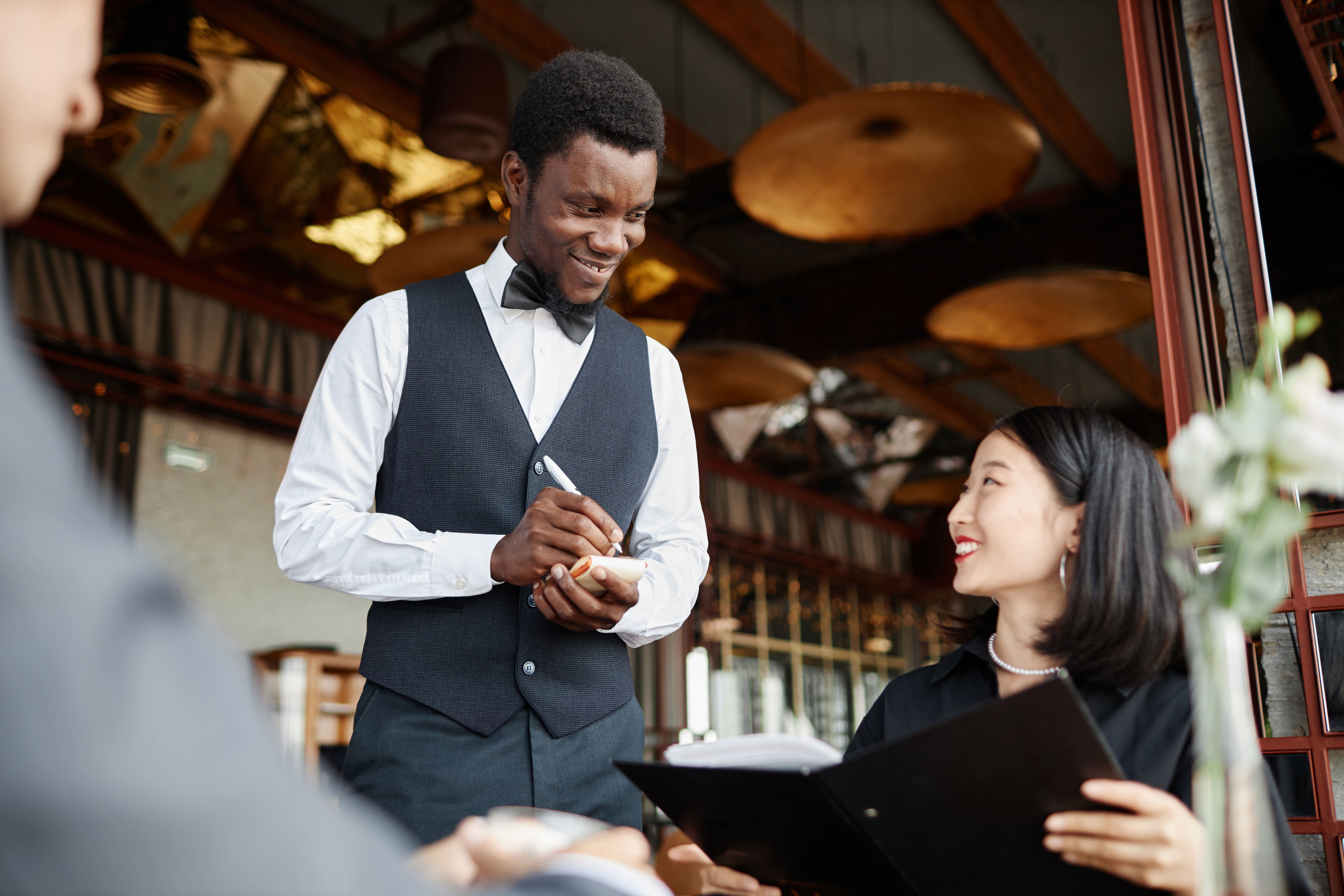
The image of a server staring at their digital device without looking up is a restaurant owner’s worst nightmare. The problem, however, isn’t the device itself, but the lack of eye contact. When a member of your team types in an order with their eyes glued to a complex interface, the customer feels ignored.
On the other hand, when the interface is designed with the dining room in mind, taking orders on a touchscreen becomes so seamless that the device fades into the background: the server enters the items with a practiced gesture while remaining fully engaged in the interaction, smiling and keeping an eye on the table.
But the ergonomics of your tools aren’t everything. For teams to adopt this posture in the kitchen without stress, training and follow-up are crucial. This is what Peggy Garnier, a BChef franchisee and Innovorder customer, emphasizes when discussing support:
“I receive personalized support to help me grow my business. I feel supported and guided.”
The Real Factor Behind Dehumanization: The Shift of Effort Toward the Customer
Dehumanization occurs when your customers feel like they’re doing the work your staff should be doing. Requiring customers to scan a QR code on a cloth tablecloth to view a menu on their smartphone, or forcing diners to place their own orders via an interface in a traditional restaurant, breaks the contract of hospitality.
The customer came to be served, not to manage their own order on a touchscreen.
Don’t shift the digital burden onto customers. According to the INSEE Focus study No. 376, one in three people lacks basic digital skills. Requiring customers to scan a QR code at their table or place orders on their own runs the risk of annoying a significant portion of your customer base, particularly older adults.
By letting the server handle the touchscreen instead of requiring customers to use a screen, you eliminate wait times in the dining room while sparing your guests the hassle of dealing with technology.
Why a server with a pad is still a server, unlike a kiosk
A self-service kiosk or a QR code changes the very nature of the interaction: the customer becomes the operator. In contrast, a server equipped with a tablet remains a hospitality professional.
Even with a digital tool in hand, their role remains the same: they listen, advise, guide, and take notes. Technology remains a tool for the team to take notes—not a barrier between you and your guests.
The right sorting criterion: irritating elements removed, or a wasted effort?
Irritants that the pad removes for the customer
A well-used pad eliminates the missteps that can ruin a meal. No more orders misread in the kitchen, dishes cooked out of order, drinks forgotten in the middle of a rush, or water pitchers you have to ask for three times. The order is sent instantly to the kitchen while the server remains available to your guests.
The same is true at the end of the meal: the service flows smoothly, the check arrives without delay, and payment is made right at the table—no need to wave your hand for ten minutes or wait in an awkward line at the counter.
The Added Value of the Server: What No Screen Can Replace
In a traditional establishment, certain steps must remain 100% human:
- the warm welcome as soon as you walk through the door;
- the presentation of suggestions and daily specials;
- personalized advice on food and wine pairings;
- handling complaints or special requests.
The grid to be applied before deploying the order form on the pad
Before adopting a new technology, always ask yourself these three questions:
1. Who makes the effort?
- Objective: To ensure that the guest is not burdened.
- Expected result: The effort should remain on the software side or with the team.
2. How much time do we save?
- Objective: To identify the minutes saved on trips.
- Expected result: increased availability of meeting rooms for the team.
3. Where should this time be reallocated?
- Objective: To ensure that the client benefits from the relationship.
- Expected result: more presence, advice, and smiles.
What the pad can do that the notebook couldn't
Answering questions about allergens without having to check in the kitchen
Does a customer ask you whether a sauce contains gluten? No more frantic back-and-forth trips to the kitchen during peak hours. Using the order-taking tool, the server can access the nutritional information for each dish with a single click. The server provides an immediate, accurate, and reassuring answer, reinforcing your restaurant’s reputation for reliability.
Serving International Customers with Precision
According to the tourism report from the Directorate General for Enterprises, France has reaffirmed its position as the world’s top destination, with 102 million international visitors. During peak hours, translating the ingredients in a sauce or identifying an allergen for a foreign customer can quickly slow down service.
With the tablet’s built-in translation feature, your team can respond instantly and accurately, ensuring impeccable service regardless of the guest’s nationality.
Announce a disruption before it affects the customer
Nothing is more frustrating for a customer than ordering a ribeye steak, waiting ten minutes, and then having the server come back to say they’re out of it. With real-time inventory updates on the tablet, a stockout is flagged immediately. The server informs the table as soon as the order is taken and right away suggests an alternative to the customer.
Recognizing a regular customer and their preferences
Connected to your customer database or restaurant loyalty program, the mobile pad lets you access a regular customer’s history—including their favorite table, preferred water, or usual cooking preference. Your staff can pleasantly surprise the customer by personalizing their welcome right from the moment they place their order.
Report classroom attendance time
By eliminating the constant back-and-forth between the dining room, the printers, and the central cash register, the pad significantly reduces the number of unnecessary trips your staff makes. This time saved translates directly into more time spent at the tables, a keener eye for empty glasses, and more attentive service.
Where to Draw the Line, According to Your Institution
Neighborhood bistro and brasserie
In these high-volume dining environments, speed is essential. The tabletop order pad and mobile payment have been well adopted by customers. They allow for a seamless flow of service without rushing guests, while preserving the banter and warm atmosphere of the bar.
Fine-dining restaurant
Here, the technology must remain invisible. The pad can be used behind the scenes or in an extremely discreet manner to relay orders to the kitchen. Eye contact, the theatricality of service, and the verbal presentation of dishes take precedence over speed of execution.
Establishment in a Tourist Area
During peak seasons, the tablet is your best ally. It simplifies multilingual order-taking, speeds up table turnover without compromising personal interaction, and ensures secure, direct table payments during busy periods.
What Digital Technology Can't Do in Table Service
Technology will never replace a server’s intuition in sensing when a table needs more time, their empathy toward an impatient child, or their ability to create a warm, welcoming atmosphere. A screen cannot defuse tension or anticipate a regular’s delight even before they place their order.
It is in these subtle yet crucial details that the heart of your business lies. Digital tools manage data; your teams manage emotions.
Good Habits to Maintain, With or Without a Face Mask
Arrival and Check-in
The moment guests arrive at the restaurant sets the tone for the entire experience. Welcoming your guests with a smile, taking their coats, and seating them comfortably should remain a purely human ritual, with no screens between you and them.
Advice and Recommendations
A tool will never replace a culinary suggestion. The description of a slow-cooked dish or a sommelier’s wine recommendation must remain moments of verbal exchange—vibrant and personal.
The Customer's Departure
Just like the moment guests enter your establishment, the closing remarks are crucial. Greeting your guests warmly, gathering their immediate feedback, and thanking them for their visit help secure their loyalty. The payment slip should not overshadow these basic courtesies.
Keep an analog exit
Always allow for some flexibility. If a customer expresses reluctance toward digital tools or wants to take some time away from technology, your teams should be able to switch instantly to a 100% traditional service.
👉 See also: 10 Tips for Improving Customer Service at a Restaurant
The tool handles the logistics; your teams maintain the relationship
Digitizing service in your restaurant doesn’t mean sacrificing the soul of your establishment. By entrusting repetitive and logistical tasks to the right mobile tools, you free your staff from stress and unnecessary trips.
The time saved is immediately reinvested in what truly adds value: listening to your needs, providing advice, and offering a warm welcome. Our experts would be happy to discuss this with you.
FAQ - Digital Transformation and Customer Experience in Traditional Restaurants
Won't the touchscreen intimidate my older customers?
No, because the server is the one who handles the device. For the customer, the experience is the same as with a traditional order-taking process, but the order is processed more quickly.
How can we keep servers from staring at their screens all the time?
Choose an intuitive point-of-sale solution with a streamlined interface, then supplement it with training focused on body language: this will help your teams learn to take orders with a natural, effortless motion while maintaining eye contact.
Does it make sense to offer QR code payments at tables in a traditional restaurant?
It would be a mistake to require it just to view the menu or place an order. However, offering it as an optional choice—especially for payment—allows customers in a hurry at lunchtime to move on quickly, without ever depriving them of the server’s warm attention throughout the meal.
Does the use of mobile tools really speed up service?
Yes. Sending orders directly to the kitchen and accepting payment right at the table eliminate two delays per table: the trip to the cash register and the wait for the check. The time saved depends on the layout of your dining room—time it during a service to see how it works for you.
How does technology help reduce ordering errors?
Digitally transmitted orders eliminate problems with reading handwriting and ensure that required details (cooking instructions, side dishes) are entered.
How does the pad affect tips?
There is no set rule on this matter. Practically speaking, a server who is more present in the dining room and a check that arrives without delay create more favorable conditions. Some point-of-sale systems also allow you to include a tip directly at the time of payment, which is a decision you’ll need to make based on your clientele.
Is it possible to incorporate tablet-based ordering without detracting from the charm of a lovely restaurant?
Absolutely. The device is unobtrusive, fits easily into a pocket or case, and blends in with your staff’s professional demeanor.
How should you respond if a customer refuses to use digital services during their meal?
Be flexible. The server can write down the order on a traditional notepad and enter it into the point-of-sale app once they’re in the back.