Expanding your business
4
min

How can ordering terminals help restaurateurs boost margins?

Chloé Thévenet
Updated on:
24 April 2026
Share this article

25% to 40% increase in average shopping basket. Dreamlike figures, don't you think? And what if these results were within your reach, thanks to a simple and effective solution? The order terminal is much more than just a machine: it's a real engine for growth and profitability, freeing you from constraints so that you can concentrate on what's essential. 

That's what we see every day at Innovorder. Let us tell you how the order terminal optimizes your operations and increases your margins. 

The control terminal, a lever for profitability

Think back to your last rush hour. Staff under pressure, queues getting longer and longer, stress mounting in both the dining room and the kitchen. The order desk, on the other hand, knows no stress. It works 24/7, without ever making a mistake.

Increase productivity and reduce staff costs

Installing an order terminal is almost like adding an employee to your team, but without the payroll costs. It takes care of the order-taking, freeing up your staff to concentrate on higher value-added tasks: preparing food, welcoming customers or advising them.  

Your team is more productive and personnel costs are reduced, without sacrificing service quality.

Control costs by reducing errors and waste

At the counter, misunderstandings happen fast. An order taken in noise or stress, the wrong option ticked, and a dish has to be redone. With a self-service ordering terminal, customers validate their orders themselves. No more careless mistakes, no more wasted raw materials and no more customer dissatisfaction. This translates directly into a higher gross margin and better stock management.

Boost customer turnover and sales volume

An order placed at a kiosk is faster than one taken by an employee. This streamlining of the customer experience and increase in turnover allow you to process more orders in a given amount of time, which translates into higher revenue.

During peak hours, every minute saved when taking orders translates into one more customer served. Shorter lines also mean fewer customers walking away: sales recovered without requiring additional resources.

👉 To find out more: Fast-food ordering station: comparison of the best models

Increased average shopping basket thanks to kiosks

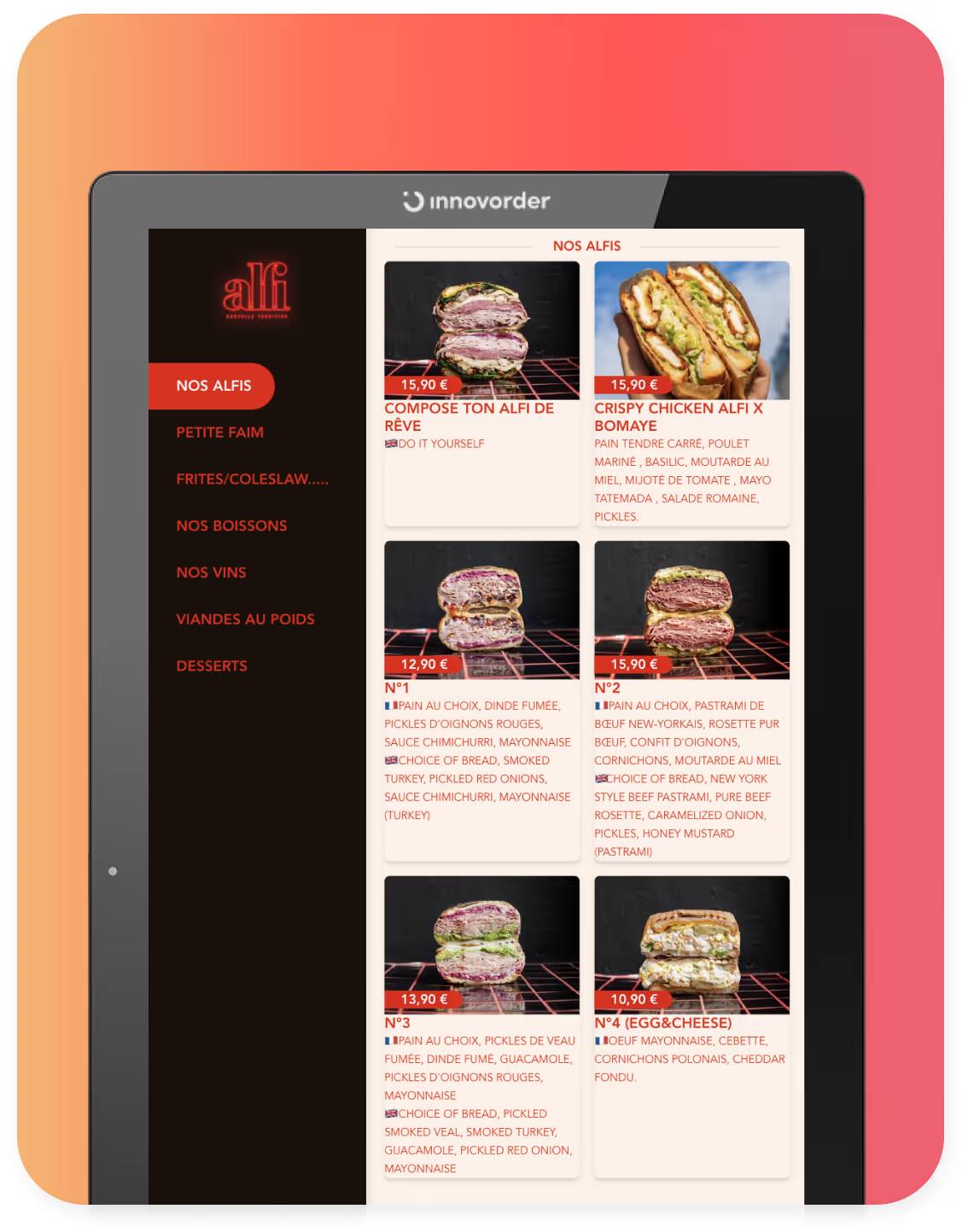
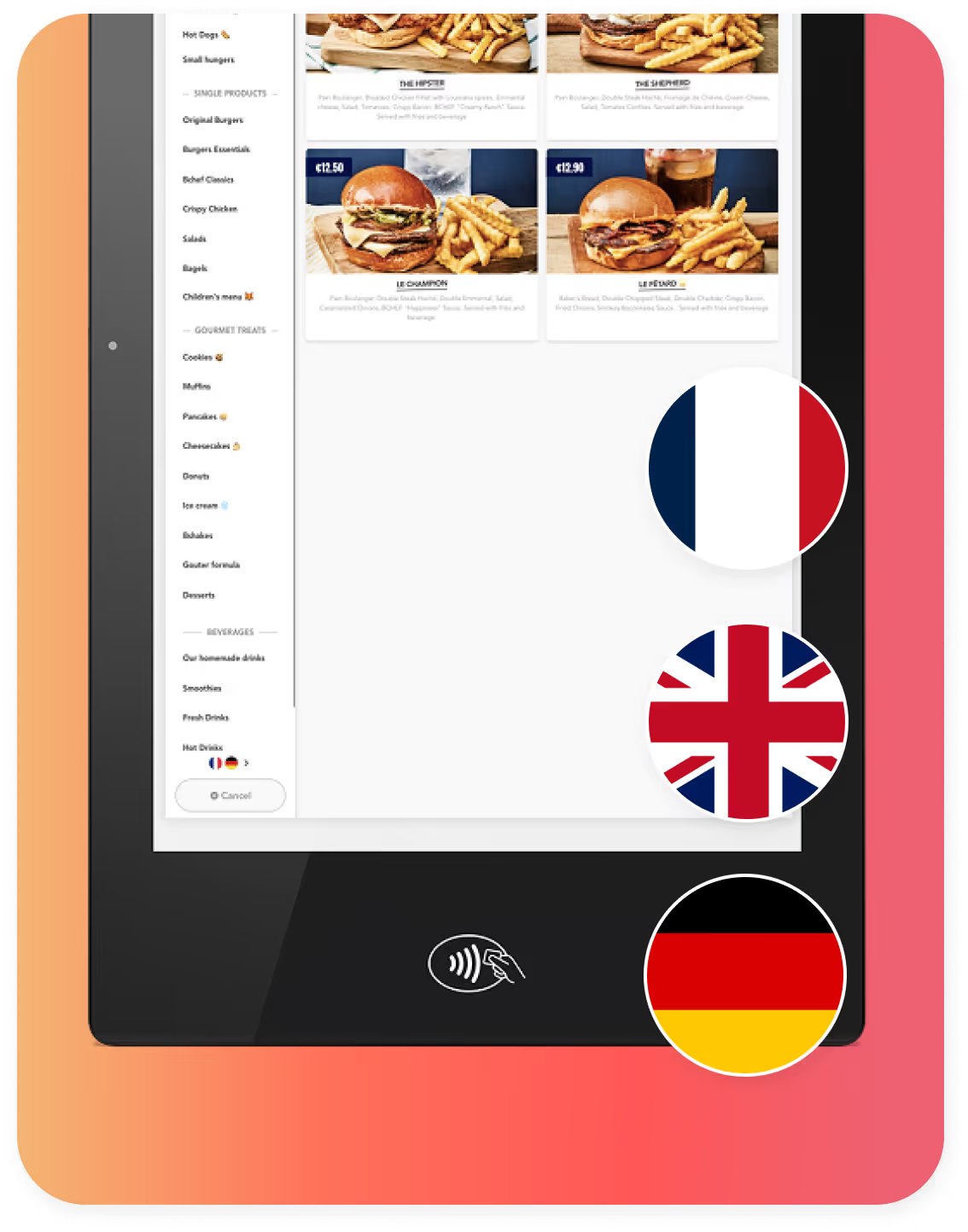
The kiosk is also an efficient, silent and always available salesperson.

Increase your average basket with automatic upselling

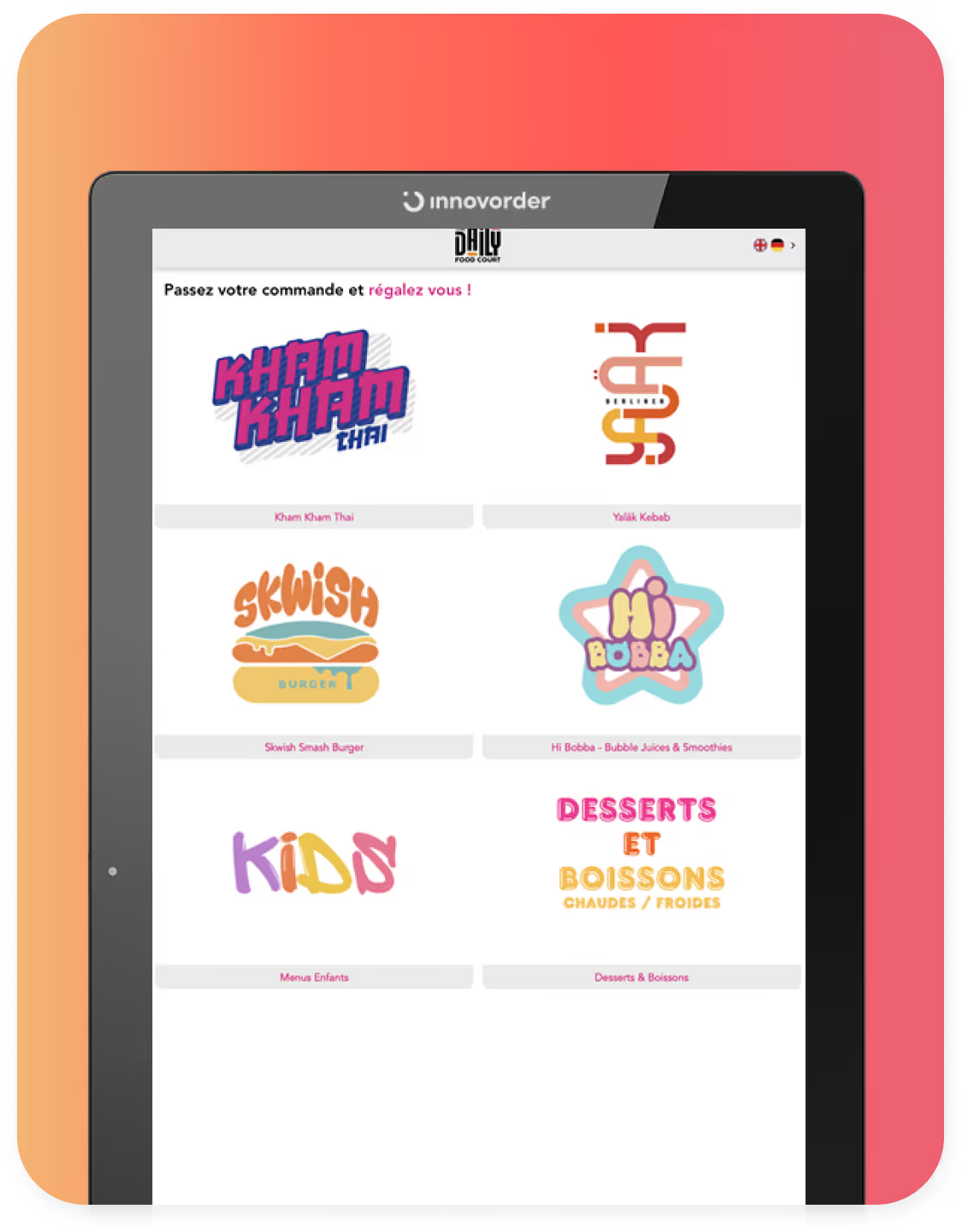
At Double XL, a food court in Magny-le-Hongre, the average order value rose from around €15 to over €20 after the installation of Innovorder kiosks—a 33% increase. The mechanism is simple: freed from the pressure of the cashier, customers take the time to customize their order, add a dessert, or upgrade to the next menu tier. Suggestions built into the kiosk—such as “For just €2 more, upgrade to the XL menu” and “Add a dessert to your order”—trigger these frictionless purchases at just the right moment. Automated upselling is a powerful tool for boosting your restaurant’s profitability.

Highlight your premium products to sell more

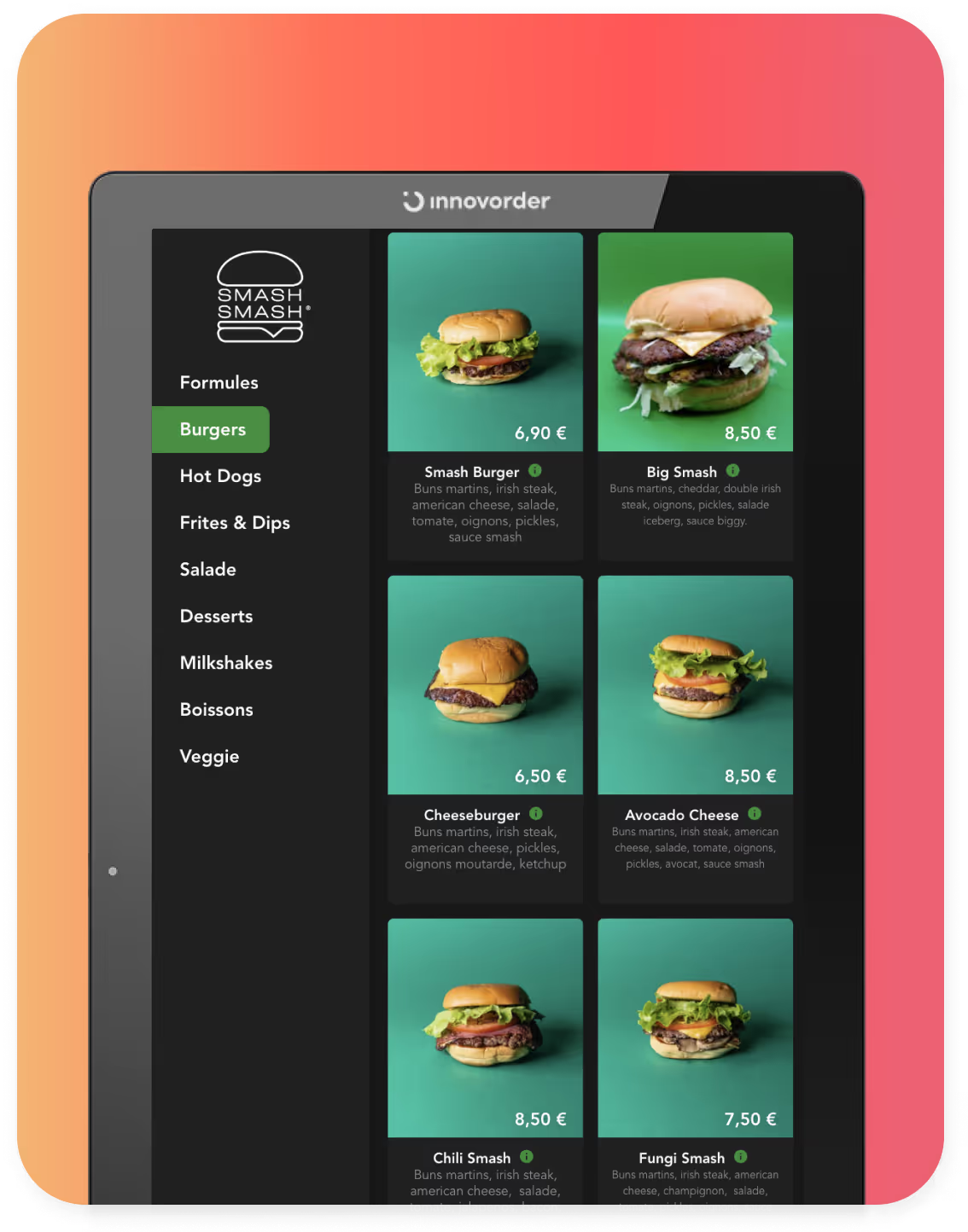
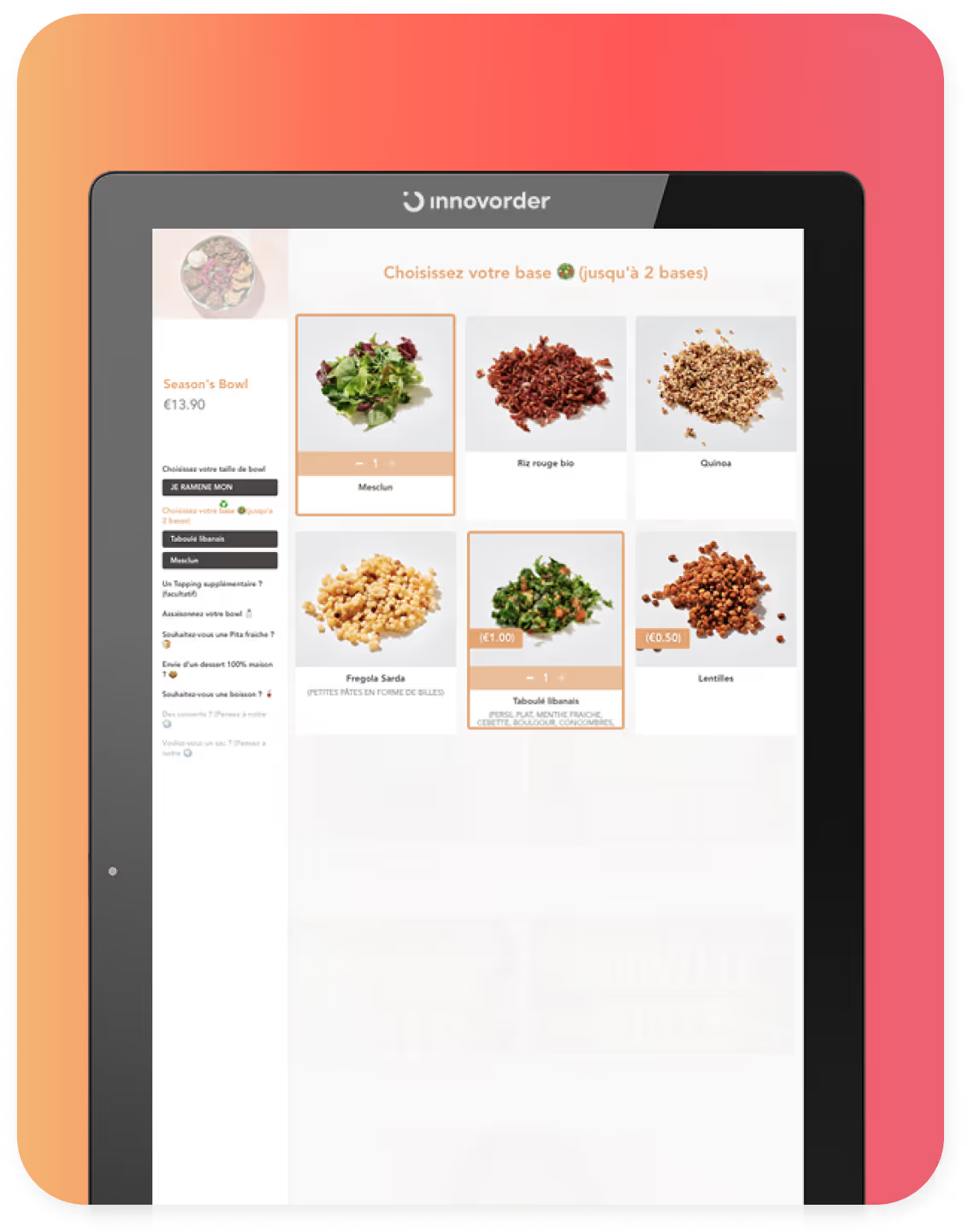
Your customers take their time. They browse the menu, discovering tempting photos of your signature dishes. The touch terminal is a veritable interactive catalog that highlights your high-margin products. By offering space to describe quality ingredients or the unique story behind a recipe, it encourages customers to indulge themselves and more easily opt for these expensive choices. It doesn't just show your premium products, it sells them for you.

Rapid, measurable return on investment

The return on investment for a kiosk depends on three factors working together: an increase in average basket size, a reduction in labor costs, and a decrease in waste. To evaluate it, the method is simple: compare the expenses incurred with the revenue generated.

- CAPEX (Capital Expenditures): the one-time cost of purchasing and installing the charging station.

- OPEX (Operating Expenses): recurring costs for software subscriptions, maintenance, and support.

On the other hand, the benefits at each service point include: additional orders driven by a smoother flow, automated upselling, time saved at the register, and fewer errors. When viewed alongside savings from reduced waste, the bottom line quickly turns positive for a high-traffic retailer.

What restaurant owners who have taken the plunge have to say NEW

Jabrane Bakuri, co-founder of Double XL, illustrates this point with concrete data: since the installation of Innovorder kiosks in his food court in Magny-le-Hongre, the average order value has risen from ~€15 to over €20, an increase of 33%. Customers, freed from the pressure of the cashier, place more complete orders, add extras, and opt for higher-priced meal options. This real-world result confirms what the operating figures show: the kiosk is not a cost; it is a productive investment.

Ordering terminal at Italian Queen

Digitalization to boost performance

Another advantage of order kiosks is that they generate valuable data which, if properly exploited, can become an invaluable asset for your business.

Use customer data to manage your margins in real time

The kiosk is an information sensor. Which dishes sell the most? At what time? Which options are the most popular? This data allows you to adjust your menus, optimize your supply chain, and refine your strategies to maximize your margins.

This leads directly to three practical applications:

1. Identify underperforming products to continuously adjust the menu, without waiting for the end-of-month report.

2. Anticipate peak times to adjust schedules and reduce food waste in the kitchen.

3. Track basket sizes by channel (pickup, in-store, delivery) to prioritize offers based on their actual profitability.

Automate your tasks to save precious time

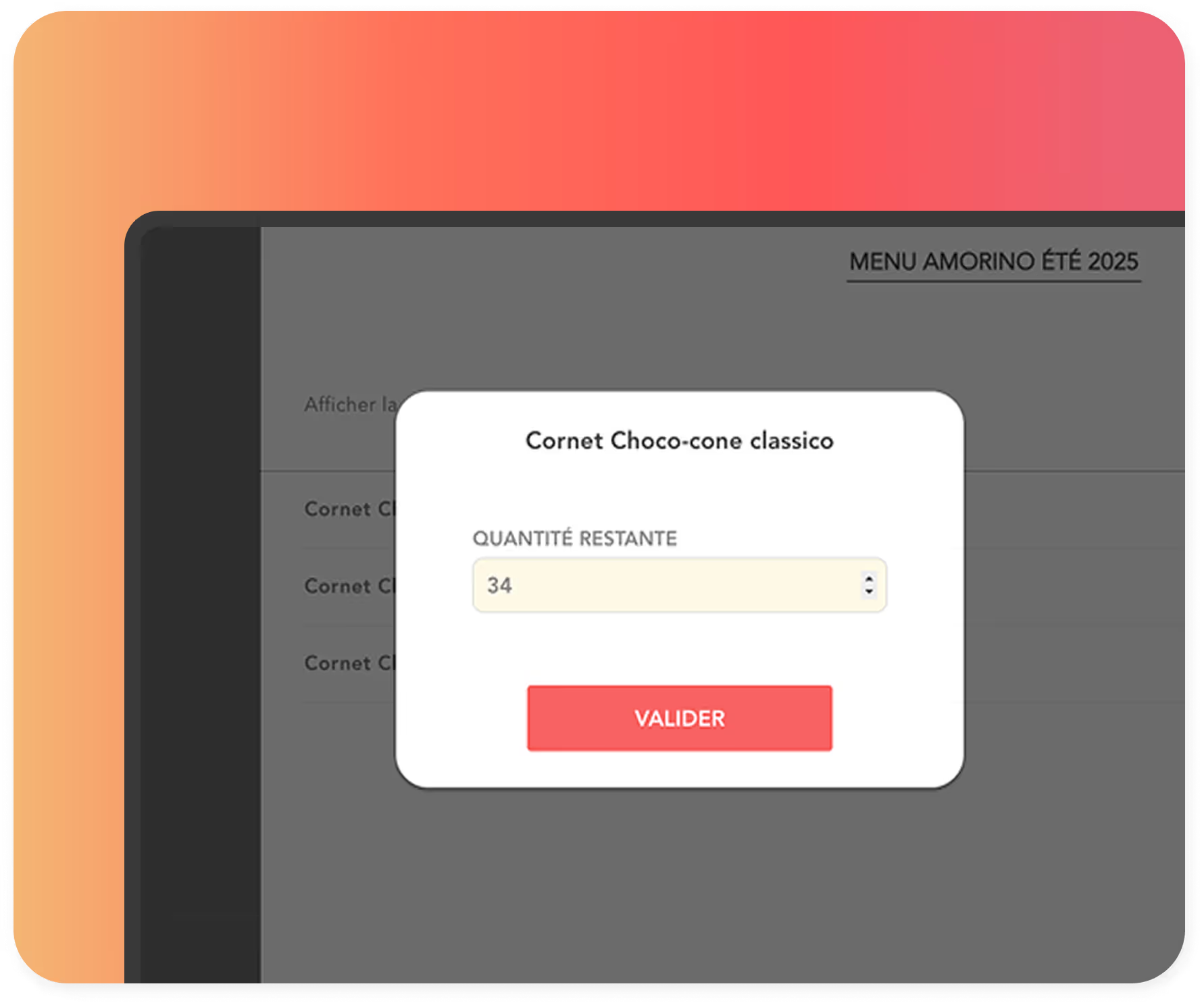
By digitizing your establishment with order terminals, you can put an end to double entries and transcription errors. Reporting is done automatically and regularly, freeing you from time-consuming tasks so that you can concentrate on the essentials: the customer experience and the development of your restaurant.

👉 To find out more: Margin and profitability in the restaurant business: everything you need to know

Kiosks: A Tool for Building Customer Loyalty and Enhancing Brand Image

The terminal is not a point of arrival, but a gateway to a more modern, connected and customer-oriented restaurant.

Turn your terminal into a powerful marketing tool

The kiosk can be an excellent marketing tool. It's the perfect place to highlight a special offer of the week or a targeted promotion. It can even be useful for proposing products according to the time of day or current trends.

Build customer loyalty with a seamless experience

The touch terminal customer experience is not limited to simply taking an order. By connecting to your loyalty program, guests can collect points, redeem benefits and even order in advance via Click & Collect. Your guests benefit from a seamless, frictionless experience that keeps them coming back for more.

What the kiosk can't do: things to keep in mind

Simply installing a charging station isn't enough to transform a restaurant. Here are a few things to keep in mind before you get started.

The kiosk does not replace human interaction in settings where service is an integral part of the experience. For table service or formats that rely heavily on personal guidance, its role remains limited.

Nor will it make up for a poorly structured menu. Without visuals and a clear hierarchy, upselling remains ineffective. The interface acts as an amplifier: it highlights what is already well presented, not the other way around.

Finally, the terminal generates data, but only if it is regularly read and analyzed. Without monitoring, those insights remain unused.

Ultimately, the order terminal is a real opportunity for your profitability. It sells for you, optimizes your team's work, reduces errors and provides you with a wealth of valuable information. It's the key to a more efficient, more modern, more profitable restaurant. 

Is the ordering kiosk right for your restaurant?

The kiosk delivers measurable results in settings with high volume and repetitive customer journeys: fast food, food courts, institutional dining, and hybrid concepts.

If you handle a steady stream of customers, offer a menu with various options or add-ons, and have a busy team during peak hours, the kiosk can significantly boost your operating margins. To see how it fits into your specific situation, the easiest way is to try it out for yourself.

FAQ: Frequently Asked Questions About Order Terminals and Margins NEW

How long does it take to recoup the cost of an ordering kiosk?

The timeframe varies depending on the type of establishment and the volume of orders. For high-traffic establishments (fast food, food courts), the return on investment is generally achieved quickly thanks to a combination of three factors: an increase in average basket size through automatic upselling, a reduction in order errors, and optimized service times. The evaluation is based on comparing CAPEX (purchase and installation) and OPEX (subscription, maintenance) with the gains generated per service.

Is the ordering kiosk suitable for all types of restaurants?

It delivers measurable results in settings with steady foot traffic and repetitive customer journeys: fast-food restaurants, food courts, institutional dining, and high-volume brasseries. It is less suitable for fine-dining restaurants or formats where personalized service is key. The kiosk’s effectiveness also depends on the quality of the menu: a well-structured layout, product descriptions with visuals, and clearly prioritized options.

Does automatic upselling really work better than in-person upselling?

Yes, for a simple behavioral reason: customers using self-checkout kiosks aren’t subject to the implicit social pressure of standing in line. They take the time to read, compare, and add items to their cart. At Double XL, this dynamic has increased the average basket size from ~€15 to over €20. Contextual suggestions prompt customers to add items—something that rarely happens at the checkout counter, where speed takes precedence over discovery.

-

 Let's talk about the best way to optimize your restaurant's margins. Contact us for a personalized demo of our order terminals.

Contact an expert
Make an appointment
Christophe Peinoche
Christophe Peinoche
Catering expert
"With 20 years' experience working for some of the world's largest foodservice groups, I'm helping the sector with its digital transformation through innovative digital solutions."
Make an appointment with Christophe
Romain Vardon
Romain Vardon
Catering expert
"With solid experience in developing key accounts, I'm supporting the digital transformation of the foodservice sector by proposing innovative digital solutions to optimize operations."
Make an appointment with Romain
Caroline Motamedi
Caroline Motamedi
Catering expert
"After several years' experience in a major foodservice group, I support key accounts in optimizing their operations and digital transformation."
Make an appointment with Caroline
Subscribe to our newsletter.
Join our Product & Marketing newsletter, we will send you relevant news every month.