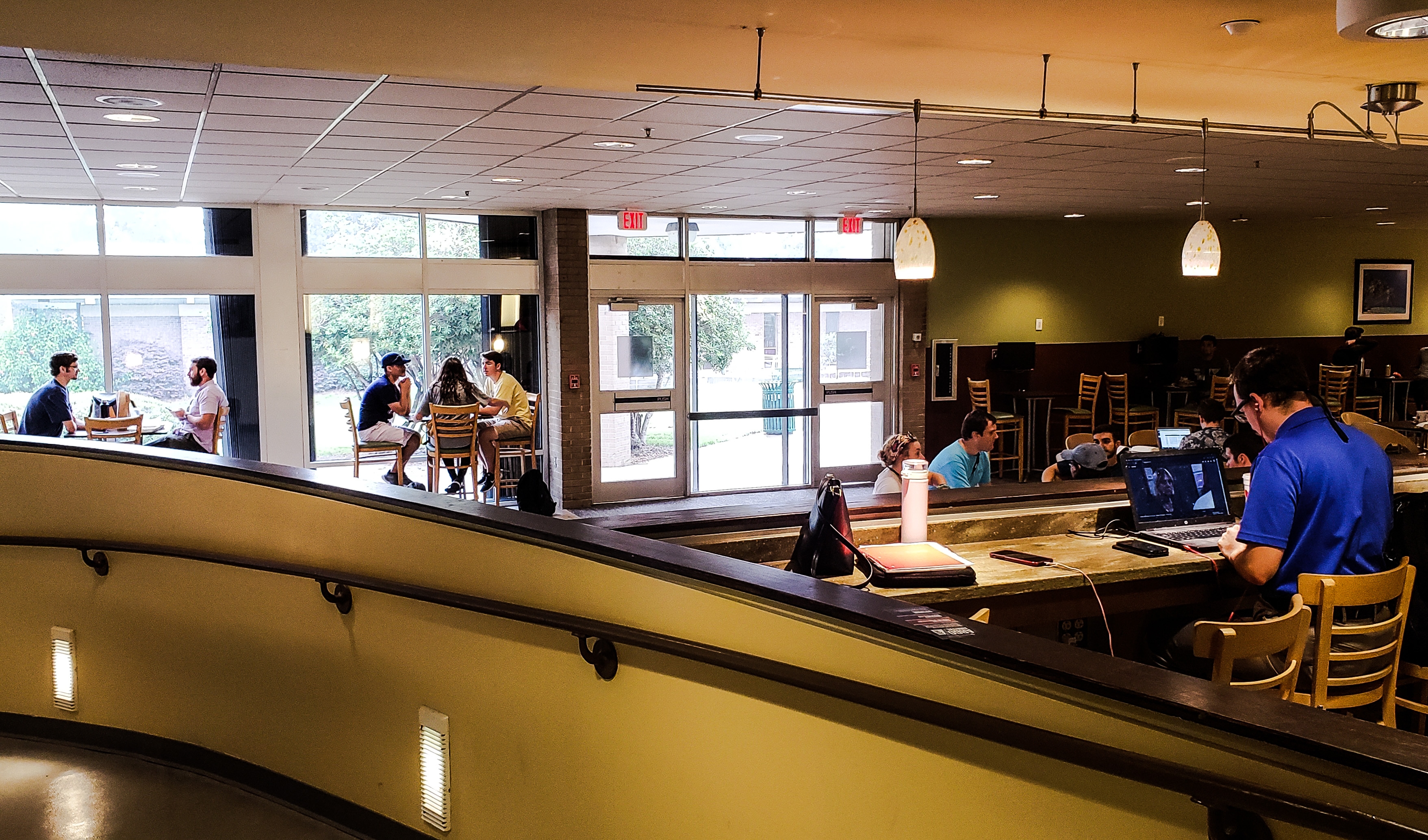
11:50 a.m., in front of a university cafeteria. The line spills into the lobby even before the doors open. In the kitchen, the staff has ramped up production, planning for a large crowd. At the register, every minute counts: one diner who hesitates, one Izly account that needs to be reloaded, and the entire service line slows down. Since the start of the school year in September 2026, this scene has become a daily occurrence at many university cafeterias.
Key Points: Since May 4, 2026, all students have been paying €1 for their meals at the CROUS. The network has served 48% more meals since the start of the school year—1.3 million more meals compared to 2025, according to the CNOUS. The CNOUS is asking each CROUS to determine and post the maximum sustainable capacity of its restaurants. A line always forms at a specific bottleneck: food preparation, distribution, checkout, or seating. Each measure addresses only one of these.
€1 Meals: What Has Changed Since May 4, 2026
Previously reserved for students receiving financial aid and those in financial need, the €1 meal has been available to all students since May 4, 2026. It includes a main course and up to two side dishes, once per meal service. Students must have an active Izly account, which is used to verify their eligibility.
Attendance exceeded all expectations. The budget had been based on an increase of about 10 percent. The CNUS reported a 48 percent increase in meals served since the start of the school year, representing 1.3 million more meals than in 2025. The 2027 budget bill allocates 143 million euros to fund the measure.
In restaurants, staff are handling this volume with the same facilities and, for now, the same number of employees. An inter-union coalition called for a strike on September 22 to demand additional resources. New hires have been announced, but it will take several months to fill those positions. On September 24, the president of the Cnous asked the directors of the Crous to “ensure the maximum sustainable capacity of each dining facility,” which is posted at the entrance and online. The unions oppose this: they see it as a way to limit access to the €1 meal.
For a food service manager, the issue isn't about settling this debate. It's an operational one: how can we serve as many guests as possible, under good conditions, with the resources currently available?
Why Lines Form: The Four Bottlenecks in a College Cafeteria
A line is a sign of a single bottleneck, rarely of several at once. Identifying it prevents you from investing in the wrong place. And the peak is very concentrated: according to the CROUS, most of their cafeterias see the highest number of diners between 12:00 p.m. and 1:00 p.m. In a university cafeteria, the bottleneck is almost always found at one of these four stages.
- Production. The kitchen can’t keep up: the serving trays empty faster than they can be restocked, and the serving line is waiting for dishes. Signs: the line moves in fits and starts, at the pace of the kitchen’s output, and the selection dwindles toward the end of service. The CROUs acknowledge this to students: depending on how busy it is, there may be fewer options toward the end of service.
- The serving line. The buffet line is too long or poorly organized: guests hesitate, cross paths, and retrace their steps. A telltale sign: the line comes to a standstill even before reaching the cash register.
- Checkout. The checkout process takes too long: verifying the guest’s identity, applying the rate, and processing payment. Sign: Guests are waiting with their trays in hand in front of the register.
- Seating. The dining hall is full: guests who have been served can't find a place to sit, and the staff is slowing down the flow of people entering. Note: The line forms at the entrance to the dining hall, not at the self-service counter.
A real-world example illustrates why this analysis matters. At a CROUS facility equipped by Innovorder, a restaurant increased its daily meal output from 2,200 to 2,800 in one year, with a seating capacity of 500. The bottlenecks there are in production and the line: the kitchen must produce more within the same time slot, and diners all arrive at the same time. That’s why this CROUS is focusing on online ordering—which gives the kitchen visibility and spreads out arrival times—rather than on automating the checkout process, which it did not consider a priority for this location.
Calculate Your Maximum Sustainable Capacity
A restaurant's sustainable capacity is the number of guests it can serve during a seating without compromising safety, the quality of the meal, or the staff's working conditions. It is calculated step by step: the lowest of the four factors sets the upper limit.
- Checkout capacity = number of customers processed per minute per register × number of open registers × service duration in minutes.
- Restaurant capacity = number of seats × number of possible seatings during a service (service duration divided by the average time spent at a table).
- Serving capacity = throughput of the self-service line, measured in guests per minute during peak hours.
- Production capacity = the number of meals the kitchen can produce and replenish during service hours.
Let’s take a hypothetical example. A restaurant with 400 seats, open from 11:30 a.m. to 2:00 p.m. (150 minutes), with an average table time of 30 minutes, can seat approximately 400 × 5 = 2,000 guests. If it processes 6 guests per minute across 2 registers, its processing capacity is 6 × 2 × 150 = 1,800 guests. The bottleneck here is the checkout process: opening a third register during peak hours increases capacity to 2,700, at which point the dining room becomes the limiting factor.
It takes just three steps to obtain these figures for an actual restaurant: time 20 checkout transactions, count the table turnover rate, and note the time when the first trays are emptied.
Addressing Each Bottleneck
Each lever corresponds to a specific jam. Applying one to the wrong spot moves the line without reducing it.
If the cafeteria is the bottleneck: move some meals out of the restaurant. Takeout and pickup at collection points free up seating. The CNUS explicitly recommends this. Shifting class or opening hours—in coordination with the university—also spreads out arrival times.
If the bottleneck is checkout: reduce the time spent on each transaction. The CROUS organizations are directing students to the Izly app, which, according to their FAQs, makes checkout “easier and faster,” and some restaurants have opened a priority checkout lane reserved for this payment method. The tray scanner, which automatically recognizes dishes and calculates the total, eliminates the need for manual entry. These tools speed up the checkout process but do not create additional seating or increase production capacity.
If the bottleneck is production or the line: smooth out demand. This has been the most common scenario since the start of the school year. Online ordering with a pickup time slot gives the kitchen visibility into volumes before service begins: it allows the kitchen to produce at the right time, rather than being overwhelmed by the midday rush. Orders appear on a production screen and are prepared in the order of the time slots. For diners, fixed-time pickup takes some students out of the line. This is the principle behind Crous & Go, rolled out at the Crous de Rennes-Bretagne. The Crous mentioned above is taking it a step further: it plans to open a dedicated Click & Collect location on Saturdays—for takeout only—to relieve congestion at an already strained site.
👉 Learn more: Effective Order Processing at RU: Strategies and an Example from the CROUS
There is one restriction specific to the €1 meal: the price applies only once per service. The system must therefore verify this automatically—both at the register and for online orders—to avoid adding a manual check to the process. In a CROUS facility equipped with Innovorder, the system recognizes the first meal of the service—billed at €1—and applies the full price to subsequent meals, without any intervention from staff.
What the Situation at the CROUs Teaches Other Institutional Food Service Operations
The case of the CROUS is extreme, but not an isolated one. A company cafeteria following a consolidation of sites, a school cafeteria after a price reduction, or a hospital cafeteria that opens to visitors: attendance can increase sustainably without the facilities or staff keeping pace.
There are three best practices that apply everywhere. Assess your capacity before you need it, to determine which bottleneck will give way first. Address the actual bottleneck rather than the most visible one: the line may be at the register, but the cause is often in the kitchen. And automate pricing rules from the start, so that checkout doesn’t become the step that slows everything down when volume increases.
Technology streamlines operations, but it doesn't replace chefs or seating capacity. A restaurant's limitations still lie in its production capacity and dining room.
👉 Learn more: How can you free up time for your teams in institutional food service?
Do you manage a university or institutional cafeteria that’s experiencing an increase in traffic? Talk to an expert
FAQ: The €1 Meal at the CROUS
Is the €1 meal available to all students?
Yes, as of May 4, 2026: all students with a student ID card—whether or not they receive a scholarship—as well as continuing education trainees, apprentices, and work-study students with a vocational student ID card, doctoral students, and civic service volunteers. You must have an active Izly account; otherwise, the full fare applies.
Can you have two meals for 1 € on the same day?
The rate applies once per meal service: at lunch and, when the restaurant offers it, at dinner. It is not possible to purchase a second €1 meal for someone else; the Izly account holder must be present.
What is maximum sustainable capacity?
This is the number of guests a restaurant can serve without compromising safety, quality, or working conditions. On September 24, 2026, the CNUS requested that each CROUS define this number and post it at the entrance to its restaurants and online.
How much does the measurement cost?
The 2027 budget bill allocates 143 million euros. The government has clarified that the measure is contingent on the budget's passage.
Sources