5 restaurants that use artificial intelligence to improve their performance
Noémie Daniel
Updated on:
03 February 2026
Share this article
AI in restaurants is no longer a futuristic concept. It is already being integrated into kitchens, cash registers, and management tools in the most successful establishments. From automated order taking to inventory optimization, artificial intelligence is becoming a concrete lever for profitability and operational fluidity.
Here are five examples of restaurants that have adopted AI, with measurable results in terms of customer experience, productivity, and day-to-day management.
Why are restaurants adopting artificial intelligence?
In the restaurant industry, tasks pile up: planning, team organization, administrative management, communication, performance analysis. AI makes it possible to absorb this complexity without increasing the mental load on teams.
It becomes a true operational assistant, capable of analyzing, forecasting, and assisting with decision-making in real time.
Reduce operating costs and optimize margins
No more mistakes due to fatigue or poor visibility. Anartificial intelligence solutionfor the restaurant industry processes sales data, anticipates volumes, and refines decisions.
AI continuously calculates, compares, and analyzes to help restaurant owners better manage their business.
Improve the customer experience and streamline the ordering process
AI order taking reduces friction. Smart terminals, automatic recommendations, simplified processes: customers can order more easily, without stress or excessive waiting times.
The result: a smoother experience and more consistent service, even during busy periods.
Anticipate flows and manage inventory more effectively
By analyzing daily and hourly traffic rates, AI enables precise inventory management. It limits stockouts, reduces waste, and ensures product turnover.
Three other brands that have embraced AI in the restaurant industry
McDonald's: order prediction and drive-thru customization
McDonald's uses artificial intelligence to dynamically adjust drive-thru menus based on time, weather, and consumer habits. The goal is to speed up customer decision-making while maximizing sales performance.
Subway: chatbot for online ordering and product recommendations
Subway uses intelligent chatbots to guide customers through the online ordering process. AI simplifies the journey, personalizes recommendations, and promotes the sale of complementary products without complicating the experience.
Starbucks: Predictive AI to anticipate demand and optimize inventory
At Starbucks, predictive AI analyzes sales data to anticipate demand by point of sale. The result: fewer stockouts, optimized inventory management, and better resource allocation on a large scale.
Atlas: AI designed for restaurant owners
Unlike generalist solutions, Atlas is designed to respond to real-world constraints. It centralizes data, analyzes performance, and helps restaurant owners make better decisions faster.
Artificial intelligence in the restaurant industry is establishing itself as a key driver for managing business, securing margins, and improving the customer experience.
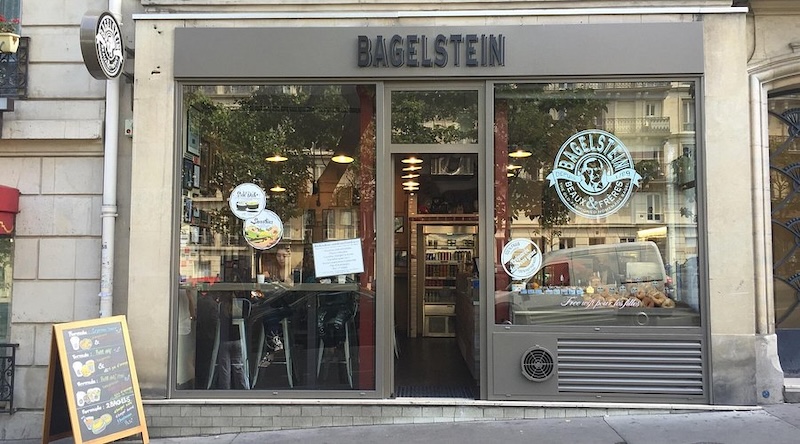
Brands such as Bagelstein, Tranché, and Starbucks show that well-integrated AI does not replace humans: it enhances them. It frees up time, makes decisions more reliable, and provides a clear vision.
By leveraging field-tested solutions such as Atlas, restaurant owners can transform their data into concrete actions and build a more agile, profitable, and sustainable model.
FAQ – Artificial Intelligence and Food Service
How can AI be used in the restaurant industry?
AI is used for order taking, inventory management, sales forecasting, price optimization, and performance management.
What are the benefits of AI for a restaurant?
Time savings, cost reductions, improved customer experience, and data-driven decisions.
Is AI replacing restaurant staff?
No. It assists teams, automates repetitive tasks, and frees up time for humans.
"With 20 years' experience working for some of the world's largest foodservice groups, I'm helping the sector with its digital transformation through innovative digital solutions."
"With solid experience in developing key accounts, I'm supporting the digital transformation of the foodservice sector by proposing innovative digital solutions to optimize operations."