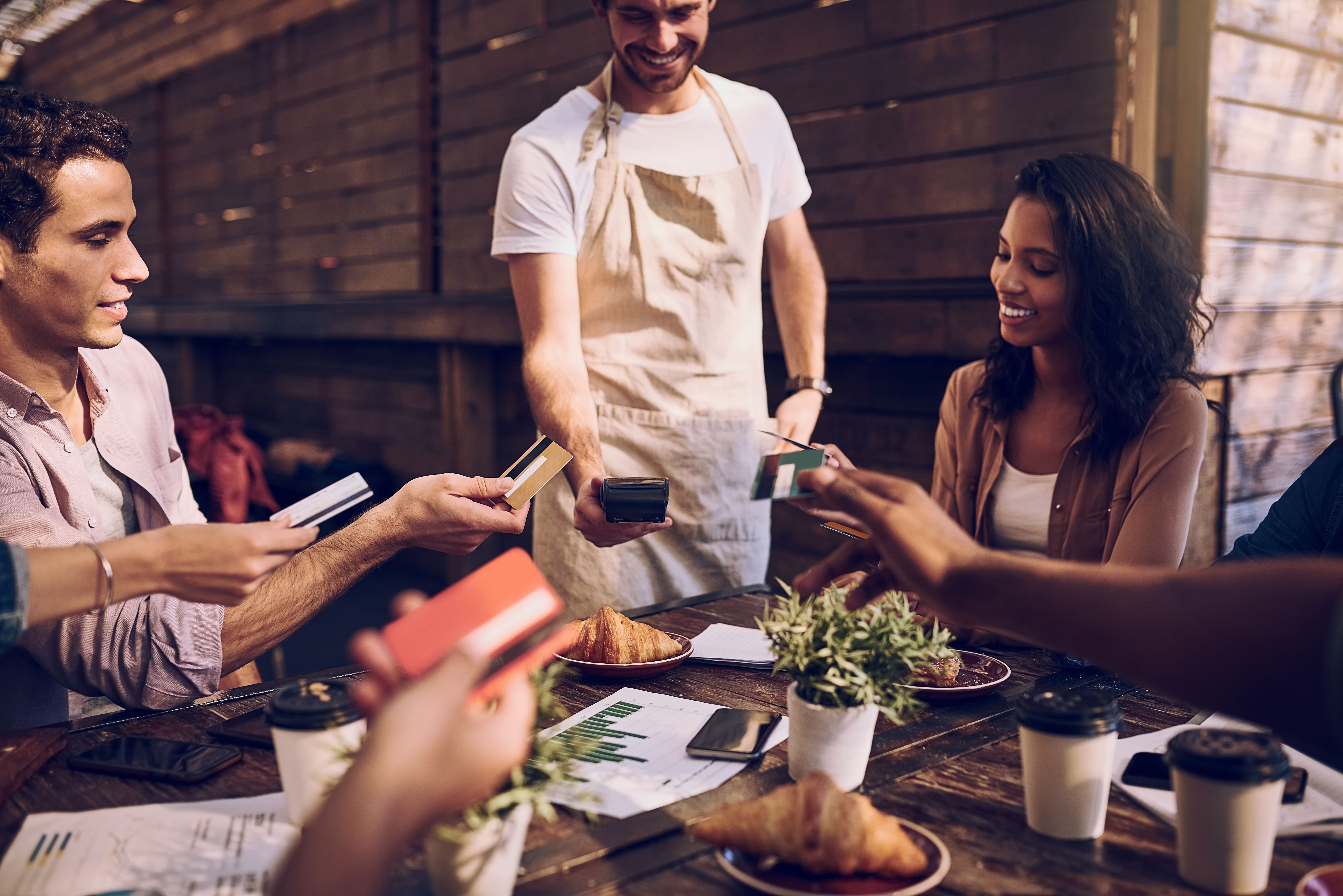
12:10 p.m. on a Tuesday. An order comes in on your website: two takeout meals, paid for with a meal voucher card. A minute later, another customer tries to pay for their delivery with the same card, but the payment is declined. They call the restaurant to find out why. Situations like this will become more common: the meal voucher reform, currently under review in Parliament, will make the vouchers 100% digital and explicitly allow for remote ordering.
Key Points: On October 12, 2026, the National Assembly passed a bill that will make meal vouchers entirely digital as of January 1, 2028, and authorize their use for online orders. Members of the National Assembly had initially excluded delivery platforms; the Senate’s Social Affairs Committee removed this exclusion on November 3. The bill is scheduled for debate in the Senate on November 19, 2026, and is not yet final. One rule, however, is already in effect: delivery and service charges cannot be paid with meal vouchers.
What the meal voucher reform entails (as of November 6, 2026)
The bill aimed at modernizing and rebalancing the operation of meal vouchers was passed by the National Assembly on October 12, 2026, with 87 votes in favor and none against. The government has initiated the fast-track procedure: following the Senate’s vote, a joint committee may be convened if the two chambers cannot reach an agreement.
For a restaurant owner, the key measures to keep in mind are as follows:
- Complete digitization as of January 1, 2028: meal vouchers will only be available as a card or through an app. Paper vouchers will be phased out.
- Open-ended remote ordering: The text permits the purchase of a meal from a participating restaurant, including through remote ordering methods (click-and-collect, drive-thru, delivery).
- Sundays and holidays: The pass would become valid every day, rather than only on workdays.
- Extended validity: The Assembly extended the period of use to three years.
- Grocery shopping: The purchase of food products not intended for immediate consumption remains permitted through December 31, 2027.
- Issuer fees: These may be capped by decree, following consultation with the Competition Authority.
The Senate committee also introduced a two-part daily limit: a higher limit for meals and another for groceries. The amounts will be set by regulation. The current limit remains at 25 euros per day.
👉 Learn more: Meal vouchers: Everything you need to know about the current regulations
Delivery Platforms: The House and the Senate Disagree
This was the point that generated the most discussion. During the Assembly’s review, an amendment was adopted to prevent the approval of meal delivery platforms: customers would no longer have been able to pay for orders placed through these apps using meal vouchers. However, ordering through the restaurant’s website or app remained permitted.
On November 3, the Senate Committee on Social Affairs struck this provision from the bill. Its report puts forward three arguments:
- The rule has already been met: the regulations already prohibit the use of meal vouchers to pay for service and delivery fees.
- It would be ineffective: child support payments are made directly to the restaurant, regardless of the platform used.
- This would raise an issue of fairness: the same delivery would be eligible for meal vouchers if the restaurant delivered it itself, but not if it went through a platform.
At this point, nothing has been decided. The bill will be debated in session on November 19, and the final version will depend on the outcome of the legislative process. Currently, payment with meal vouchers is still allowed on food delivery apps for the portion of the order that consists of food.
This already applies to online orders paid for with meal vouchers
Regardless of the outcome of the vote, several rules already govern the use of meal vouchers to pay for orders placed remotely. These rules account for most of the declined payments that customers report to restaurant owners.
- Shipping and service fees are not eligible. If your online order includes shipping fees, the customer must pay them separately, for example, by credit card.
- The daily limit applies: 25 euros per day as of today. An order totaling 32 euros cannot be paid for entirely with meal vouchers.
- Not all products are eligible. Alcoholic beverages, for example, are excluded. An order that includes such items can only be paid for with meal vouchers for the eligible portion.
- The restaurant must accept the card issued by the relevant issuer. Each issuer has its own membership requirements, which should be verified before displaying this payment method.
Let's take an example: A customer orders a meal set for 14.50 euros, a dessert for 4 euros, and a beer for 4.50 euros, with a 3-euro delivery fee. Only 18.50 euros can be paid with meal vouchers. The beer and the delivery fee—totaling 7.50 euros—must be paid using another form of payment.
Why online ordering remains a key factor, regardless of the outcome of the vote
Whether or not platforms remain eligible, the reform is moving in the same direction: 100% digital tickets that can be used remotely on a daily basis. For a neighborhood restaurant, a fast-food chain, or a franchise network, placing an order online offers three concrete advantages.
A Margin That's Been Preserved
On a platform, the restaurant pays a commission on each order, often around 30 percent. On its own website, it pays only the payment processing fees. For an order paid for with meal vouchers, the difference is the same: the voucher issuer’s commission applies in both cases, but the platform’s commission does not.
Click & Collect: The Format Best Suited for Meal Vouchers
With no delivery fees, a “click & collect” order can be paid for entirely with meal vouchers, up to the maximum limit. This is the simplest option for employees, who can order their lunch in the morning from their desk and pick it up at noon without waiting in line.
The customer is still yours
On your website, the customer's order, order history, and contact information are stored in your system. You can reach out to them, offer them your loyalty program, and track their orders—something a third-party platform doesn't allow you to do.
With the Innovorder online ordering system, payment via digital meal vouchers can be enabled for multiple issuers. Eligibility is set on a per-product basis in the catalog, which prevents meal vouchers from being offered on orders that contain alcohol, and the daily limit is automatically enforced. Depending on the issuer, the customer can pay for the ineligible portion with a credit card in the same order.
👉 Learn more: Online ordering: 9 reasons to skip the platforms for your restaurant
A Checklist for Accepting Meal Vouchers with Your Online Order
- List the providers your customers use most often and verify your affiliation with each one.
- Enable payment by meal voucher for your online order, by issuer, and for each pickup option (takeout, delivery).
- Configure product eligibility in your catalog: Alcoholic beverages and other excluded products must be identified.
- Arrange for delivery charges to be paid by another method, and clearly inform the customer of this before payment.
- Display "meal vouchers accepted" on your order page and in your storefront: this is often what makes customers choose your website over an app.
- Follow the final stages of the legislative process, beginning with the Senate debate on November 19, so you can adjust your plans to reflect the final text.
Would you like to accept meal vouchers for your online order? Talk to an expert
FAQ
Can I pay for an online order with a meal voucher?
Yes, at a restaurant that accepts the relevant issuer's voucher, up to the daily limit and only for eligible items. The ongoing reform explicitly enshrines this option in law.
Can shipping costs be paid with meal vouchers?
No. Shipping and service fees are not covered by meal vouchers and must be paid by another method.
Will meal vouchers be banned on Uber Eats and Deliveroo?
The issue is still up in the air. The National Assembly voted to exclude delivery platforms on October 12, 2026, but the Senate Committee on Social Affairs struck that provision from the bill on November 3. The bill will be debated in the Senate on November 19, 2026, and the final version will depend on the outcome of the legislative process.
When will paper meal vouchers be phased out?
According to the bill under discussion, meal vouchers will be exclusively digital as of January 1, 2028. This date is subject to confirmation by the final vote on the bill.
Sources