Understand everything about the NF525 standard in 5 points
Claire Fournol
Updated on:
10 November 2026
Share this article
Is it time to set up a point-of-sale system or replace the solution you chose in the past? In addition to being high-performing and tailored to your needs, it must, above all, comply with the law. Compliance must be verifiable in two ways: through a statement from the software vendor or, even better, through a certification such as NF525.
No need to frown. By the end of this article, you’ll know everything there is to know about the NF525 standard!
1. Cash Registers in Restaurants: What Are the Legal Requirements?
Finance Law No. 2015-1785 of December 29, 2015—and more specifically, Article 88 of the so-called “anti-VAT fraud” law—establishes the legal and regulatory framework governing cash register systems. As a restaurant owner, you are under no obligation to install a cash register, but if you do, it must comply with this law, effective January 1, 2018.
This law requires every business owner who operates a cash register and is subject to VAT to be able to prove that their software is compliant. This proof can take two different forms.
The first, and without a doubt the simplest and most effective, is the NF525 certification. Before being a standard, NF is above all a mark owned by the AFNOR group. The NF525 mark, which is the subject of this article, is managed by INFOCERT on behalf of AFNOR. By granting this certification, this accredited organization allows cash register and payment systems editors to offer merchants and restaurant owners solutions that guarantee data reliability and integrity.
The second option isthe individual certificate issued by the software publisher, prepared according to a template established by the government. The 2025 Finance Act had called for its elimination, but the 2026 Finance Act (Article 125) reinstated it effective February 21, 2026. Both forms of documentation are therefore valid once again.
While this “self-certification” is perfectly legal, restaurant owners who use the point-of-sale software have less protection in the event of an audit: the software provider alone makes the commitment, without an audit by an independent body.
2. What does the NF525 standard specify?
The NF525 certification aims to prove that your cash register system meets the following conditions:
Condition of security : the software used must allow to secure the original data, all the modifications made as well as the supporting documents.
Condition of inalterability : the software used preserves all the data without possibility of return or modification. Similarly, all corrections must be written down.
Archiving conditions : the software must provide for an archiving period where the data is frozen and dated with a technical device guaranteeing the integrity of the information.
Retention conditions: the software must keep the data for a minimum of 6 years and close them at regular intervals.
These 4 conditions are intended to prevent the modification or deletion of data, a maneuver put in place to reduce the taxation applied to the restaurant.
Beyond the legal obligation, this certification is also a plus for the daily management of your activity since it will considerably facilitate the follow-up and analysis of orders. It is also a competitive advantage and strengthens the confidence of your customers.
3. How can you identify an NF525 certificate?
The NF525 certificate takes the form of an A4 document and includes the following information:
the certificate number,
the date,
the name and address of your establishment,
the name of the software and its version,
the name of the certifying body,
and the validity date of the certificate.
In the event of an audit, this is the document that will be required. You can find it online or your publisher will send it to you upon request.
To find out whether a software publisher is certified or not, simply visit the NF525 website and search for the product or publisher name. After that, there’s no room for doubt!
4. What are the risks of noncompliance?
In the event of an audit, your obligation as a restaurant owner is to provide the General Directorate of Public Finance (DGFiP) with either the certificate issued by an accredited body (Infocert/AFNOR for NF525, or the LNE) or the individual attestation from your software provider. If you are unable to do so, the fine is 7,500 euros per software program or point-of-sale system.
You then have 60 days to come into compliance. If, during a subsequent audit, you are still not in compliance, the fine may be imposed again (BOFiP, BOI-CF-COM-20-60).
Please note that within 30 days of receiving the inspection report, restaurant owners may submit comments and provide any missing certificates or documentation. If these supporting documents are provided within this time frame, the fine will not be imposed.
Finally, the submission of a false certificate is a crime punishable by 3 years in prison and a fine of 45,000 euros.
Spoiler Alert: Our payment processing system not only complies with current regulations, but—more importantly—it’s integrated with all the solutions we offer!
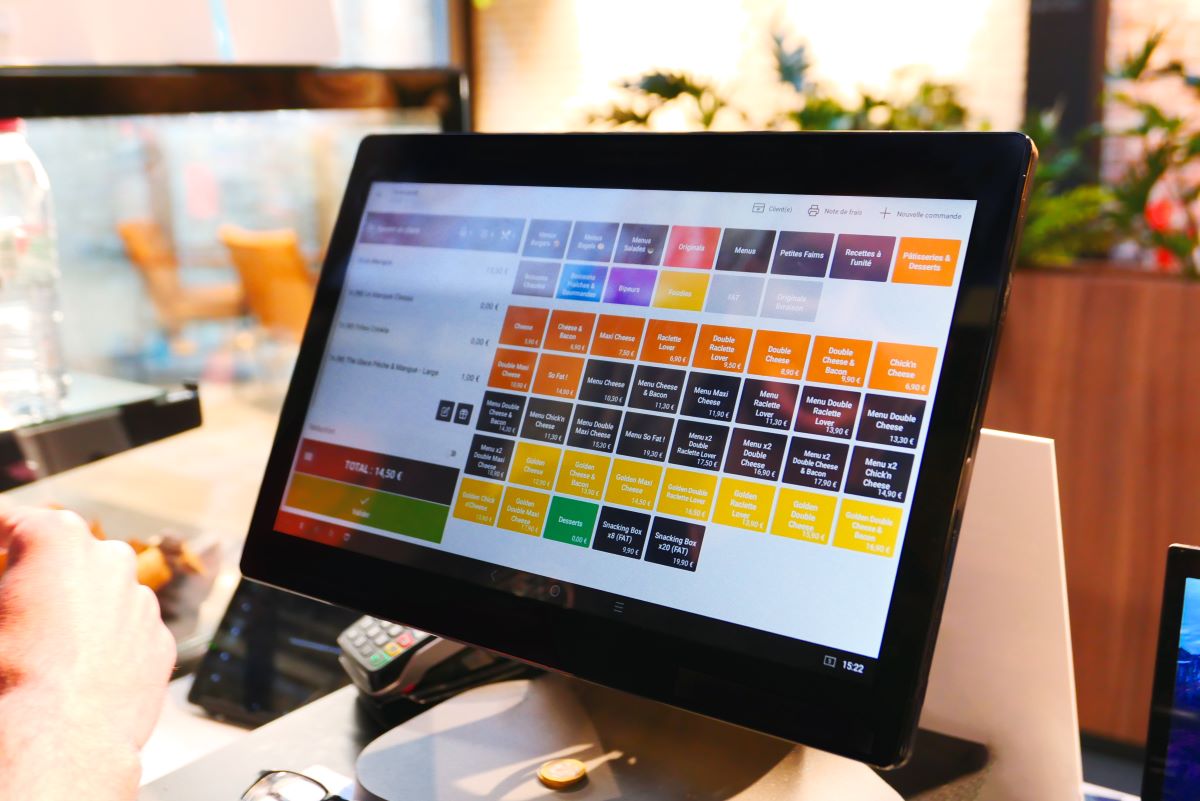
Thanks to its touch screen, our cash register is both intuitive and scalable and will allow you to manage your omnichannel sales with ease so that you can focus on the essential: customer satisfaction.
At Innovorder, we consider the cash register to be the conductor of your restaurant. That's why it's so important to choose it carefully!
The one that we put at your disposal allows you to :
Receive all your orders, regardless of the channel used (counter, kiosk, online order, table order via QR code, click and collect, etc.)
centralize the management of the peripherals with which your restaurant is equipped: POS, order terminal, coin dispenser, printer, beeper, cash drawer, etc.
Our cash register is also a great management tool because it facilitates the analysis of your data and allows you to make accurate reports of your activity to make the right decisions.
Mandatory Certification in 2026? What Has Changed Between 2025 and 2026
You may still read online that certification by an accredited body will become mandatory as of September 1, 2026: this is no longer the case. Here is a timeline of events.
Effective January 1, 2018: Any business subject to VAT that uses a cash register must use secure software and be able to prove it, either with a certificate or a statement from the software provider.
2025 Finance Act (Section 43): Planned elimination of the publisher’s certification. Publishers were required to have their software certified by an accredited body, with the deadline extended to September 1, 2026.
2026 Finance Act (Section 125): The publisher’s individual certification is reinstated effective February 21, 2026. The September 1, 2026, deadline therefore no longer applies.
What you need to do today: Ask your publisher for their certificate or attestation, verify that it covers the version of the software you are using, and keep it in a folder where it can be easily produced in the event of an audit.
Do you want to equip your restaurant with the best digital solutions on the market? Contact an Innovorder expert and receive customized advice for your establishment.
"With 20 years' experience working for some of the world's largest foodservice groups, I'm helping the sector with its digital transformation through innovative digital solutions."
"With solid experience in developing key accounts, I'm supporting the digital transformation of the foodservice sector by proposing innovative digital solutions to optimize operations."