How to Write a Successful Business Plan for Your Bakery
Chloé Thévenet
Updated on:
22 July 2026
Share this article
Opening a bakery is one of the most ambitious ventures in the food service industry. Behind the warm, welcoming image of a neighborhood bakery, the reality is much more demanding: today, a profitable bakery is run as much on the basis of financial data as it is on artisanal expertise.
Rising energy costs, changing consumer habits, the rise of snacking, and local competition—the market is changing rapidly. In this context, a bakery business plan is no longer just an administrative document for banks: it is the strategic foundation of your project.
What are the essential components of a bakery business plan?
Introduction of the project leader and the team
The first thing banks and investors look at isn't your bakery. It's you.
They want to know if you can manage a complex operation with demanding schedules and margins that need to be constantly monitored.
Here are a few of the key points to highlight:
Your professional background,
Your degrees or training,
Your management experience,
Your management skills,
The key members of your team,
Your vision for the project.
A solid case rests as much on the numbers as on the human capacity to implement them.
Market analysis and research on local competition
A bakery can fail in a prime location but succeed in a less desirable one with the right strategy.
The challenge isn't just about traffic, but about converting it into customers.
Your research should follow a simple logic: Who are your customers, when do they shop, and why would they choose your business?
Take the time to analyze:
Direct competitors,
Morning/afternoon/evening traffic,
Local customs,
Customer segments,
Uncovered opportunities.
For example, a high-end bakery can thrive in an upscale residential downtown area, but it would be less suitable for a price-sensitive neighborhood.
Your bakery business strategy should be directly based on this analysis.
The premises, location, and layout of the spaces
In the bakery business, location alone can virtually determine a store’s revenue potential.
But keep in mind: a good location doesn't just mean "high foot traffic." Also consider:
Visibility,
Accessibility,
Parking,
Customer traffic,
Laboratory capacity,
Delivery logistics.
Many project owners don’t realize the technical constraints of the space —such as exhaust systems, electrical capacity, accessibility for people with disabilities, and ventilation—until it’s too late.
The Product Offering: Range, Positioning, and Differentiation
Today, a bakery’s profitability doesn’t depend solely on bread sales. It comes from diversifying its product offerings: pastries, snacks, beverages, lunch specials, takeout, and more.
Many bakeries expand their product range too much when they first start out. However, the broader the range, the more expensive it becomes to produce, manage, and make profitable.
Successful bakeries do the opposite: they streamline their product offerings to maximize turnover and profit margins and create a clear, consistent product lineup.
For example:
A premium bakery with a coffee shop vibe,
A concept focused on light lunches,
A premium artisanal selection,
A family-run neighborhood bakery,
A hybrid bakery/fast-food model.
Your unique selling point should immediately stand out to customers.
The company's legal structure and status
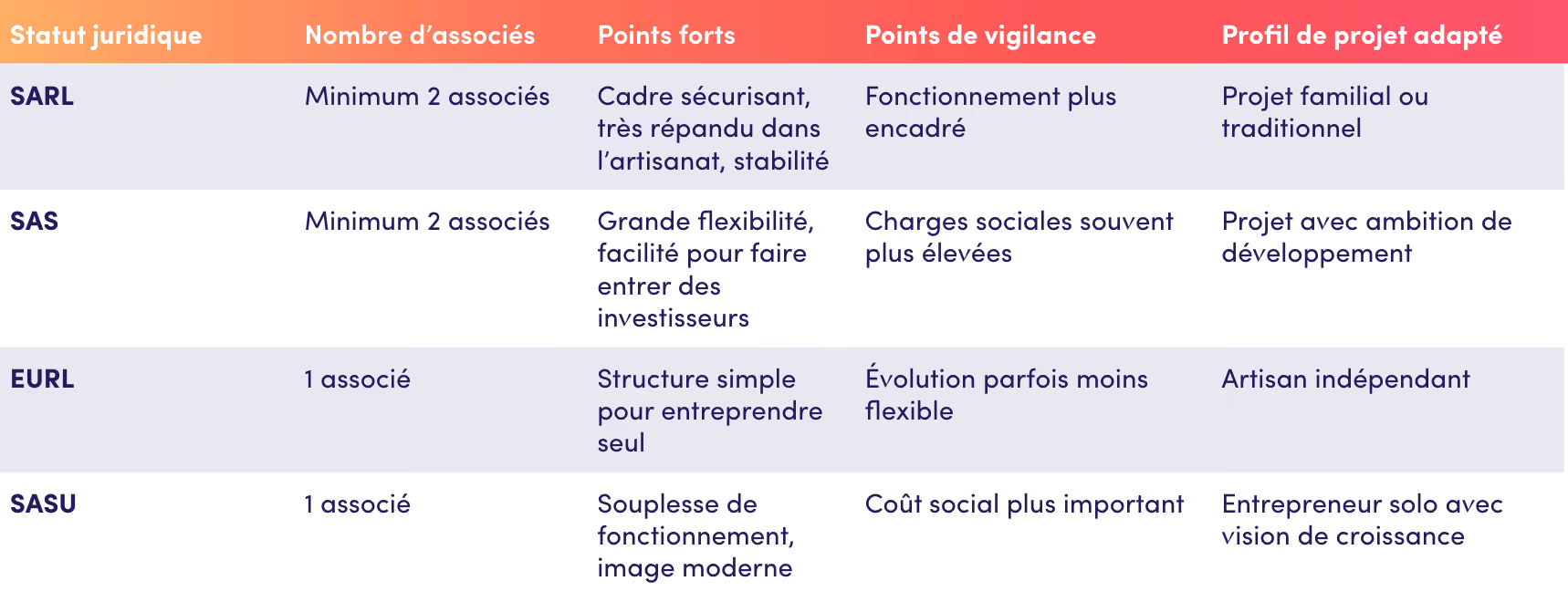
A bakery’s legal status directly affects its tax obligations, compensation, and ability to grow the business.
The most common business structures in the sector remain the SARL, SAS, EURL, and SASU. The right choice depends primarily on your business plan, management style, and growth goals.
Download a bakery business plan template
A "ready-made" business plan template can serve as a starting point to help you organize your thoughts. But be careful: banks can immediately spot proposals that are too generic. Above all, your business plan must accurately reflect the reality of your project, your location, and your business model.
To help you with this process, we’ve created a business plan template tailored to a bakery project. You can download it and fill it out directly to create a comprehensive, clear, and well-organized document to present to a bank or a potential investor.
What investments and equipment are needed to start a bakery?
Essential production equipment: ovens, mixers, cold storage rooms
Deck ovens or convection ovens, dough mixers, walk-in refrigerators, proofing chambers, dough dividers, refrigerated display cases, and pastry equipment generally represent a significant expense.
Some entrepreneurs cut costs by purchasing refurbished professional equipment. This is often a good way to keep startup costs down.
The layout of the retail space and the laboratory
The layout of a bakery directly affects the efficiency of operations, both on the sales side and the production side.
In-store, a seamless customer journey encourages upselling, reduces wait times, and enhances the shopping experience. A well-designed layout can thus increase revenue without generating more foot traffic.
The laboratory must follow the same optimization approach. An inefficient organization leads to unnecessary trips, slows down production, and reduces daily productivity.
Renovation work and code compliance
Construction costs often end up being higher than expected, particularly due to the technical requirements specific to bakeries: exhaust systems, ventilation, electrical capacity, accessibility, and public building codes.
These costs must be anticipated from the outset, as they can quickly add to the overall project budget.
Initial inventory of raw materials and supply chain management
Flour, butter, chocolate, fresh produce, beverages, packaging, or consumables: each product category must be carefully planned in advance to avoid overstocking at the time of opening.
The challenge isn’t just about “having inventory,” but about striking the right balance between product availability, turnover, and cost control. After all, in a bakery, poorly managed inventory quickly leads to losses, waste, and a decline in profit margins.
To better manage their inventory, many bakeries track simple metrics: minimum stock levels, waste, sales volumes by product, and the least profitable items. This approach allows them to fine-tune their orders and prevent cash from being tied up unnecessarily in inventory.
What business strategy should you adopt to stand out?
Develop a profitable offering tailored to new uses
Today, a profitable bakery no longer relies solely on bread sales, but on a well-rounded product lineup that is tailored to changing consumer habits.
A product range that is too broad can quickly complicate production, purchasing, and team organization. Conversely, a more focused and well-managed product range often leads to greater efficiency while improving profitability.
Snacks, lunch specials, beverages, and takeout now play a key role in revenue by increasing the average check.
Digital technology is also driving this shift: Click & Collect, pre-orders, and sales tracking make it possible to fine-tune production, streamline service, and minimize unsold inventory.
As Augustin, the founder of Tranché, points out:“In a bakery, 20 to 30% of sales are made in cash. The cash dispenser is indispensable.”
Define your pricing strategy and pricing policy
Many artisans set their prices based solely on what their competitors charge.
A very common mistake.
Your pricing policy should also take into account:
Cost of materials,
Production cost,
Bakery expenses,
Brand positioning,
Customer perception.
Pricing that is too low can undermine your profitability and give customers the impression that your product or service is of lower quality.
Integrating digital technology into your business model
Digital technology is no longer just about processing payments. It helps make better day-to-day decisions regarding production, sales, and inventory.
The most effective tools centralize several key functions:
Cash collection,
Sales tracking,
Click & Collect,
Customer loyalty,
Margin analysis,
Inventory management,
Product performance tracking.
The goal is not simply to “digitize” the bakery, but to understand what actually works: which products sell best, which time slots generate the most revenue, and which items result in the most losses.
Take, for example, a bakery located in an office district. It can significantly boost its lunchtime business by offering pre-ordered lunch specials, while also streamlining service during peak hours.
The data collected is then used to fine-tune production, minimize unsold inventory, and improve overall profitability.
Calculate production costs and margins by product
Some items generate foot traffic and enhance the establishment’s image, but ultimately yield little profit once the cost of ingredients, production time, and potential waste are factored in. Conversely, certain snack items, beverages, or pastries can become real profit drivers.
To effectively manage your business, there are several key metrics that need to be closely monitored:
How do you create a realistic and convincing financial forecast?
Estimate the initial investment: goodwill, equipment, and fixtures
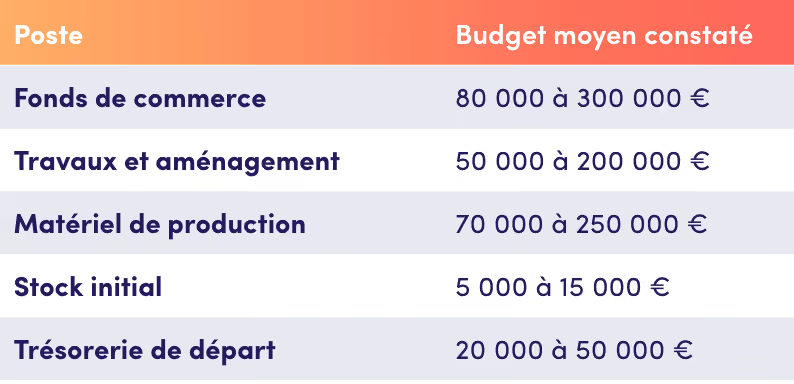
The budget for opening a bakery varies significantly depending on the location, the condition of the premises, the level of on-site production, and the project’s market positioning.
The main investment categories generally include:
In practice, setting up a complete facility with a laboratory can quickly cost between €300,000 and €500,000, particularly in major cities or prime locations.
Conversely, a takeover involving existing equipment often allows for a significant reduction in the initial budget.
Estimate your projected revenue and average order value
Revenue projections must be based on realistic assumptions.
To develop a credible forecast, several factors must be taken into account:
The actual pedestrian flow,
The estimated number of tickets per day,
The average shopping cart,
Opening days,
Seasonality,
Production and service capacity.
Banks quickly spot forecasts that are overly optimistic or out of touch with operational realities.
Calculate your fixed and variable costs accurately
In many creative projects, costs are still underestimated.
Some of the key positions to look out for include:
Salaries and payroll taxes,
Raw materials,
Energy,
The rent,
Equipment maintenance,
Packaging,
Software and subscriptions,
Bank fees and insurance.
But beyond the actual amount of these expenses, the key is to assess their impact on your profitability. An excessively high payroll, uncontrolled product losses, or poorly anticipated energy costs can quickly erode your margins.
Determine your break-even point and your profit margins
The break-even point is the minimum revenue you need to generate to cover your expenses. It tells you the sales level at which your bakery actually starts to turn a profit.
To track your business’s performance, several key metrics remain essential:
Gross margin,
Net margin,
Working capital requirement (WCR).
Monitoring these metrics makes it possible to anticipate financial strain, adjust prices, and identify the most profitable products.
Develop a 3-year cash flow plan
A cash flow plan helps anticipate periods when expenses remain high even though the business is already profitable.
How to tailor your business plan to your situation: starting a new bakery or taking over an existing one?
Business Plan for a New Venture: Starting from Scratch and Building Your Business Model
Starting a bakery allows you to build a fully cohesive concept from the very beginning.
But this also involves greater risks, since you have to build up your customer base and establish your reputation.
The business plan must demonstrate your ability to quickly reach a profitable level of business volume.
Business Plan for a Business Takeover: Analyzing Past Performance and Projecting Growth
A recovery offers several benefits:
An accounting history,
An existing customer base,
An established team,
Equipment that is already operational.
The analysis must focus specifically on past performance before making projections.
Taking over a struggling bakery: identifying the keys to turning it around
However, some struggling bakeries actually present real opportunities.
The problem may stem from:
Due to mismanagement,
With an outdated concept,
From a low-margin offering,
A lack of digitization,
A poor customer experience.
With a new bakery business strategy, some establishments are quickly returning to growth.
Lease-management: Adapting the forecast to this business model
A lease-management arrangement allows you to operate a bakery without purchasing the business. This model reduces the initial investment but involves a royalty fee and may sometimes limit certain strategic decisions. The financial forecast must therefore account for this specific cost structure.
How to present your business plan and secure funding?
Putting together a comprehensive application package for banks
A banker isn't just looking for a good idea. Above all, they want to understand whether your project is well-conceived, profitable, and solid enough to stand the test of time.
Your business plan should demonstrate that you have a firm grasp of your financial figures, expenses, and business model. And presentation matters too: a clear, well-organized, and easy-to-read document immediately conveys a more professional and reassuring image.
Identify sources of funding: bank loans, interest-free loans, government grants
Financing a bakery often involves several options: bank loans, government grants, interest-free loans, or leases.
However, your personal contribution remains a key factor. The more you invest in the project yourself, the more confidence you instill in lenders.
Prepare your pitch and make the most of your meetings
A successful meeting with your bank depends above all on your ability to demonstrate that you know what you're talking about.
The banker will quickly test how well-prepared you are: Do you really know your expenses? Have you factored in fluctuations in business activity? Does your financial forecast align with your production capacity?
An entrepreneur who can clearly explain their bakery’s business model, profit margins, or cash flow plan immediately inspires more confidence than a business owner who remains vague about their numbers.
Negotiate the terms of your business loan
Many entrepreneurs focus solely on the interest rate. However, other factors can have a huge impact on your cash flow.
Deferred repayment, for example, can give you some breathing room during the first few months of business, giving you time to stabilize your revenue. The loan term, the collateral required, and personal guarantees are also worth negotiating.
What are some common mistakes to avoid in your bakery business plan?
Certain mistakes tend to recur in many bakery business plans. The most common one is overly optimistic projections: overestimated revenue, too rapid a ramp-up, or underestimated expenses.
Other factors are often overlooked, such as the actual cost of payroll (including temporary staff, leave, overtime, payroll taxes, and employee turnover), fluctuations in business volume due to seasonal trends, or the lack of a thorough traffic study prior to opening.
Finally, many business owners still run their operations without specific metrics. However, tracking margins, losses, average basket size, and profitability by product is essential for quickly adjusting one’s business model.
Opening a bakery is no longer just about “baking good bread.” Successful bakeries are those that know how to combine artisanal expertise, sound management, and a true business vision.
A solid bakery business plan helps you avoid making decisions based on gut instinct, secure funding for your bakery, and build a model that is truly profitable in the long run.
In an industry that currently generates nearly 15 billion euros in annual revenue in France (2025)—and has been growing rapidly since 2020—your success also depends heavily on how you approach the project
Above all, keep one thing in mind: in this business, what sets you apart isn’t just what happens in the bakery. It’s also about your ability to manage your margins, understand your customers, and adapt your offerings at the right time.
"With 20 years' experience working for some of the world's largest foodservice groups, I'm helping the sector with its digital transformation through innovative digital solutions."
"With solid experience in developing key accounts, I'm supporting the digital transformation of the foodservice sector by proposing innovative digital solutions to optimize operations."

%20(1).jpg)