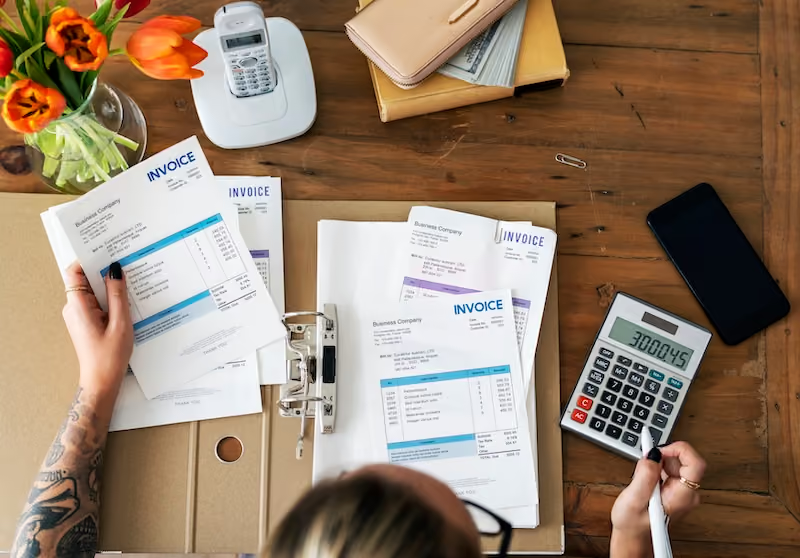
At the end of the shift, the register prints out the Z-report. The day’s sales are all there: dine-in, takeout, and delivery, broken down by VAT rate. Until now, these figures were sent to the accountant once a month—sometimes less frequently. Starting in September 2027, some of this data will also have to be submitted to the tax authorities several times a month. This is e-reporting, and for many restaurants, it’s coming at the same time as another change: the end of the simplified VAT regime.
Key Points: As of September 1, 2026, all restaurants must be able to receive electronic invoices. As of September 1, 2027, small and micro-businesses will be required to issue invoices electronically and submit their sales data to individual consumers—this is known as e-reporting. The simplified VAT regime will be phased out on January 1, 2027: affected restaurants will transition to the standard accounting method, which determines the frequency of their e-reporting. E-reporting of counter sales covers daily totals by VAT rate, without any personal customer data.
Electronic Invoicing, E-Reporting, NF525: What Really Matters for a Restaurant
Three obligations overlap, and they are often confused. In fact, these are the questions that come up most frequently among the restaurant owners we work with.
- Electronic invoicing (e-invoicing) applies to business-to-business invoices issued and received in a structured format via an approved platform. For a restaurant: your purchases (from suppliers) and your sales to businesses, such as catering services, private events, or invoiced business meals.
- E-reporting covers the submission to the government of sales data to individual customers, as well as certain payment data. For a restaurant: this includes the majority of your revenue—that is, sales made in the dining room, at the counter, at the order kiosk, and online.
- Cash register certification (NF525 or certificate) ensures that sales data is protected against fraud. For a restaurant: your cash register, which generates the e-reporting data.
For a restaurant, e-reporting is therefore the most burdensome requirement: the vast majority of sales are made to individuals, who do not receive electronic invoices.
👉 Learn more: E-invoicing Reform: Everything You Need to Know in 7 Points
The Restaurant Owner's Calendar: January 1 through September 1, 2027
The electronic invoicing reform took effect as scheduled on September 1, 2026, for the receipt of invoices by all businesses, and for the issuance and e-reporting of invoices by large companies and mid-sized businesses. For an independent restaurant, a bakery, or a small chain, the upcoming deadlines are as follows:
- January 1, 2027: End of the simplified VAT regime. Businesses that were enrolled in it will automatically transition to the standard regime without having to take any action. The annual return (CA12) will be replaced by a quarterly return (CA3) if revenue does not exceed 1 million euros; returns will be filed monthly for amounts above that threshold or upon election.
- January or the first quarter of 2027: first CA3 filing.
- May 4, 2027: Deadline for the final CA12 annual return for the fiscal year ending December 31, 2026.
- September 1, 2027: Electronic invoicing and e-reporting become mandatory for small and micro-enterprises. The law allows for a postponement by decree, no later than December 1, 2027.
These two reforms are distinct, but the first sets the pace for the second.
What your restaurant will share, and how often
For sales to individuals, e-reporting does not cover each individual receipt. According to the tax authority’s guidelines, the data reported is aggregated on a daily basis: the pre-tax total and the VAT amount for each applicable rate, along with the transaction category (sale of goods or provision of services). No personal data, such as the customer’s name, is transmitted.
The frequency will depend on the VAT regime starting in 2027:
- Normal reporting, quarterly filing: sales data once a month, payment data once a month.
- Actual/Budget, Monthly Report: Sales data every 10 days (3 submissions per month), payment data once a month.
- Basic franchise: sales and payment data every two months.
Let’s take an example. A neighborhood restaurant with 600,000 euros in revenue that previously filed its VAT return once a year under the simplified system will switch to the standard quarterly system on January 1, 2027. Starting in September 2027, it will submit its sales data 12 times a year. If it opts for monthly reporting, it will be 36 times a year. Under the 2026 Finance Act, each missed submission may be subject to a fine of 500 euros, up to a maximum of 15,000 euros per year.
At this rate, the question is no longer whether the cash register totals are correct at the end of the year, but whether they are correct every ten days.
From the register to the certified platform: the journey of sales data
The restaurant does not submit its data directly to the government. Instead, it uses an approved platform—which it must have selected—that receives data from the cash register or compatible software. The process is as follows:
- The receipt: Each sale is recorded at the register with the correct VAT rate for each product.
- Closing: The cash register's "Z" report finalizes the day's totals.
- Aggregation: Sales are totaled by day and by VAT rate.
- Verification: The manager or accountant checks the amounts before sending them.
- Data transmission: The data is sent to the authorized platform, which forwards it to the government agency.
In the system, Step 2 is the primary source of missing data: a day that hasn’t been closed isn’t reported to the accounting tools. Step 4, on the other hand, is often overlooked: a payment recorded twice, for example, throws the amounts out of balance and blocks synchronization. At Innovorder, Atlas—the data platform that centralizes payment data— includes an e-reporting tab to review data day by day and register by register before it is sent. The data can then be transferred to the certified platform in three ways: via API, automatic export, or manual export. Pennylane, a certified platform integrated with the Innovorder POS system, is one example, but the restaurant remains free to choose its own platform.
“Before closing out the day, verify that the amounts for each payment method recorded in the cash register match the actual cash received. Once the day has been closed, orders can no longer be modified, and any error on a day that has already been closed must be corrected with a reversal entry.” — Aurélien, Innovorder Support
👉 Learn more: Cash Register X and Z Reports: Definition, Requirements, and Management
Cases Specific to the Restaurant Industry
A restaurant often combines several types of sales. Each one follows a different rule.
- Dine-in and takeout. VAT rates vary depending on the method of consumption and the product, particularly for alcohol. Since e-reporting breaks down totals by rate, each product must be configured at the register with the correct rate for each method.
- Business customers. Catering services, private events, or business meals billed to a company fall under electronic invoicing, not e-reporting. This is one of the most common requests we’ve received since September: the ability to separately identify revenue and payments from sales to individuals and sales to businesses.
- The receipt given to the customer. The receipt (or “meal slip”) given to an individual is not an electronic invoice. It remains mandatory for purchases of 25 euros or more, including tax, and the corresponding sales are included in e-reporting.
- Chains with multiple restaurants. For invoices received from your suppliers through the approved platform, make sure they include the name of the specific restaurant: without this information, reconciliation becomes difficult.
- Deposits. For an event paid in installments, VAT on services is due upon receipt of payment: the payment data can then be entered into the e-reporting system. Please confirm the exact procedure with your accountant.
- Delivery through platforms. Sales are processed through your point-of-sale system or the delivery platform, depending on your setup: you need to know which source is authoritative before transmitting the data.
The Checklist Before September 2027
- Understand your VAT filing schedule starting in January 2027: quarterly or monthly. This schedule determines the frequency of e-reporting.
- Choose an approved platform—if you haven't already done so—for receiving invoices, and provide it with your VAT status.
- Verify the VAT rate settings at the register, by product and by consumption method.
- Separate sales to businesses from sales to individuals.
- Implement a regular review of daily totals, in line with the frequency of data transmissions, after closing out each day. An error in a day that has already been closed is corrected by a reversing entry, never by modifying the transaction record.
- Defining who does what: the manager, the bookkeeper, the certified public accountant, and how to correct an error.
The cash register generates the data, but it does not select the approved platform, file the VAT return, or replace the accountant. Its role is to provide accurate, pre-broken-down figures at the right frequency.
Want to make sure your business is ready for e-reporting? Talk to an expert
FAQ
Does e-reporting apply to my restaurant?
Yes, if the business is subject to VAT and is based in France: Sales to individuals must be reported starting September 1, 2027, for small and micro-enterprises.
Do I need to submit every receipt?
No. For sales to individuals, e-reporting covers daily totals by VAT rate, without any personal data.
What changes will the end of the simplified VAT system bring?
As of January 1, 2027, businesses under the simplified tax regime will automatically transition to the standard tax regime: quarterly filing for revenue up to 1 million euros, and monthly filing for revenue above that amount or upon election. This regime then determines the frequency of e-reporting.
What is the penalty for failing to comply?
Under the 2026 Finance Act, a missed e-reporting submission can result in a fine of 500 euros, and a failure to issue an electronic invoice can result in a fine of 50 euros, up to a limit of 15,000 euros per year for each of these obligations. Failure to designate an approved platform is also subject to penalties, following a three-month formal notice.
My accountant uses accounting software: Can my cash register data be imported directly into it?
This is possible when the cash register is integrated with this software, such as Pennylane for the Innovorder cash register. The data reported includes sales by payment method and by VAT rate, provided that each day has been closed out.
A day's cash receipts aren't showing up in my accounting records: why?
Most often, the day’s cash register has not been balanced, or there is a discrepancy in the amount (such as a payment that was recorded twice). With e-reporting, this type of discrepancy must be corrected before each submission.
Does the receipt given to the customer count as an electronic invoice?
No. For individual customers, a receipt is still required for purchases of 25 euros or more (including tax), and the sale is subject to e-reporting. Only sales to businesses require an electronic invoice.
Does my health insurance provider report directly to the government?
No. The data goes through an approved platform, chosen by the restaurant, which forwards it to the government.
Sources
- impots.gouv.fr — The simplified VAT system will be eliminated effective January 1, 2027; September 22, 2026
- DGFiP — E-Reporting Form for Transaction Data
- LégiFiscal, October 1, 2026
- Compta-online, updated October 5, 2026
- CAPEB — Stricter Penalties for Noncompliance with Electronic Invoicing Requirements, May 18, 2026
- Comptaresto, February 23, 2026