How Does Digitalization Boost the Profitability of Fast-Food Restaurants?
Chloé Thévenet
Updated on:
31 July 2026
Share this article
Today, digitalization is much more than just a trend—it can truly make a difference for fast-food restaurants. Do you work in the restaurant industry? Then you know just how fierce the competition is and that every euro counts. But what if we told you that investing in digital technologies could not only save you time but also boost your profits?
Let's take a look now at how digital transformation can help you reduce costs, increase sales, and improve the customer experience as well as the management of your business—ultimately boosting your profitability.
1. Cost reduction
Here are a few areas where technology plays a crucial role in reducing costs:
Error reduction
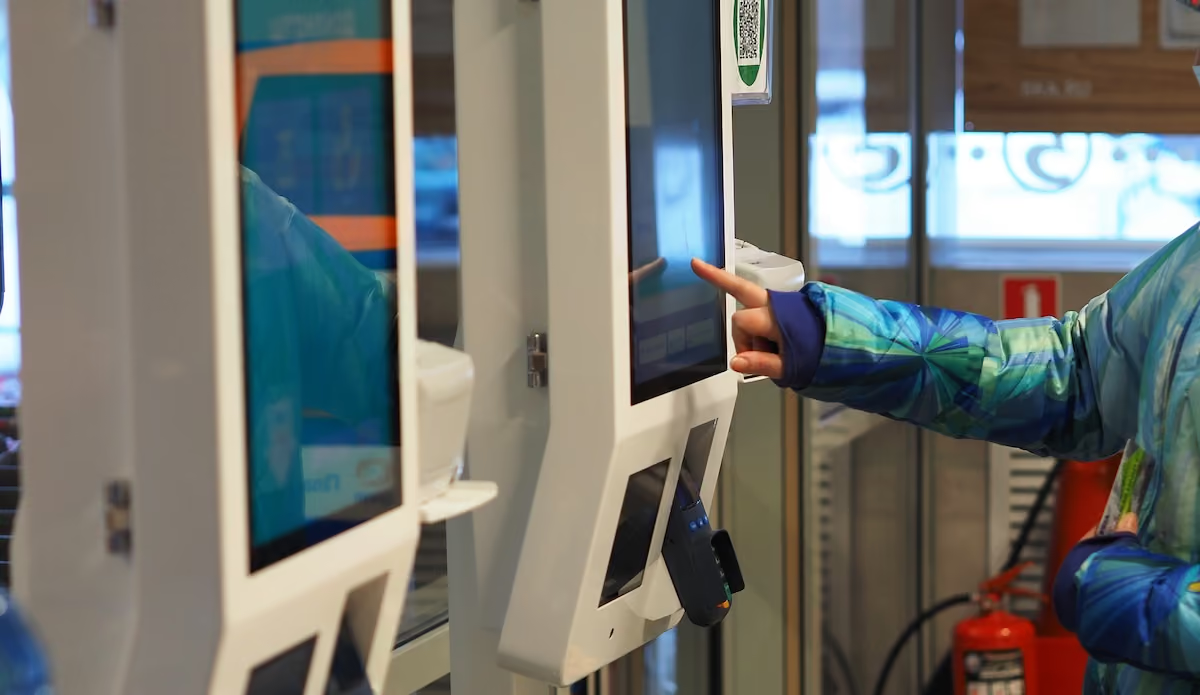
Human errors can be costly, especially in a fast-paced environment like a fast-food restaurant. Thanks to digital ordering systems, such as self-service kiosks or mobile apps, the risk of ordering or payment errors is significantly reduced.
Customers enter their orders themselves, minimizing the risk of misunderstandings with staff and improving the accuracy of information transmitted to the kitchen. The result: less waste and lower costs for error correction. errors.
Staff optimization
Digitalization is making workforce management more flexible and efficient. By automating certain repetitive tasks—such as taking orders, processing payments, managing inventory, and scheduling—your employees can focus on higher-value tasks, such as preparing meals or welcoming customers. This reduces the number of servers or cashiers needed, without compromising the quality of service.
Inventory management software allows you to accurately track inventory levels in real time, thereby reducing the risk of excess inventory or stockouts. For example, inventory management applications can alert you when products are nearing their expiration dates, allowing you to better manage purchases and prevent food waste.
This reduction in waste is not only good for the planet, it also reduces the costs associated with losses.
2. Increase in the restaurant's revenue
Digitization isn't just about cutting costs; it also allows you to increase your fast-food restaurant's revenue through various strategies detailed below:
Additional sales
Order kiosks and online ordering systems are powerful tools capable of generatingadditional sales. By offering menu suggestions or add-ons directly on the interface, you encourage customers to add complementary items to their order. For example, a customer ordering a burger might be offered a side of fries or a drink. This upselling increases the average order value without any effort on your part.
Digitalization is an excellent way to diversify your sales channels. In addition to in-store orders, you can offer solutions such as Click & Collect or home delivery. With digital tools, customers can place orders in advance from their phones, which simplifies the shopping experience. Furthermore, managing orders remotely through partner delivery platforms (UberEats, Deliveroo, etc.) opens you up to a wider customer base, thereby increasing your revenue.
Customer loyalty
A study conducted by the Harvard Business Review shows that retaining a customer costs 5 to 25 times less than acquiring a new one. Digital solutions offer personalized loyalty programs, allowing you to reward your most loyal guests with special offers or discounts. Additionally, by collecting data on consumer habits, you can provide even more targeted offers, increasing the likelihood that your customers will return.
3. Better customer experience
According to a study conducted jointly by the Groupement National des Indépendants (GNI) Hôtellerie & Restauration and Sunday, 70% of restaurant owners view technology as an essential tool for improving the customer experience. Here are some of the benefits it has to offer:
Reduced wait time
Order kiosks and mobile apps allow customers to place their orders more quickly, which reduces wait times and improves the flow of service. Shorter wait times mean a better customer experience, which leads to higher customer satisfaction—and that can result in more repeat business and increased revenue.
Order customization
Digitization enables a high degree of order customization. Customers can specify their preferences (allergies, specific ingredients, etc.) directly through the digital interface, allowing for more precise customization and better service. This enhances the customer experience while reducing errors caused by special requests that are not taken into account.
Greater accessibility
Digital systems are often multilingual, which helps attract an international customer base. In addition, these tools generally accept all modern payment methods (credit cards, mobile payments, etc.). The purchasing process becomes significantly simpler.
Digitization also allows you to manage your facility more transparently and efficiently.
Real-time performance monitoring
Digital tools let you track your restaurant’s performance in real time : sales, orders, peak hours, and more. This analysis allows you to adjust your strategies based on actual data and maximize profitability. You’ll also be able to identify trends and tailor your offerings accordingly.
Synchronization with the kitchen
Orders placed at the kiosks or via the apps are immediately sent to the kitchen, thereby reducing preparation times and minimizing the risk of errors. Also note that the seamless synchronization between the front of the house and the POS softwareenables smoother and faster order management, resulting in improved operational efficiency.
5. Competitive advantage
Image de marque
Today's consumers expect modern, convenient services, and that's exactly what you offer them by adopting digital tools. You also enhance your business's image by showing that you're at the cutting edge of technology and attentive to your customers' needs.
Adapting to new consumer trends
Consumer habits are changing rapidly and constantly, and digitalization is a way to respond to these changes. Accepting mobile payments, online or kiosk orders, and home delivery are now among customers’ basic expectations. By offering these options, you position yourself as a modern and innovative business, ready to adapt to new trends.
To determine whether digitization is profitable for you, it’s important to understand certain key metrics, such as cost of goods sold (COGS), net profit margin, and the return on investment (ROI) of the technologies you deploy. These metrics will allow you to measure the actual impact of your digital investments on your profitability.
Our profitability simulator
At Innovorder, we've developed a profitability simulator to help you estimate the impact of digital transformation on your restaurant. Want to run your own simulation? Visit our profitability simulator.
Digitalization is an essential tool for fast-food restaurants, enabling them to reduce costs, increase revenue, improve the customer experience, and optimize operational management. All of this has a significant impact on your restaurant’s profitability, so don’t wait any longer—invest in digitalization and boost your restaurant’s profits!
-
Want to boost your fast-food restaurant’s profitability through digitalization? Talk to an Innovorder expert and find the right solutions for your restaurant!
"With 20 years' experience working for some of the world's largest foodservice groups, I'm helping the sector with its digital transformation through innovative digital solutions."
"With solid experience in developing key accounts, I'm supporting the digital transformation of the foodservice sector by proposing innovative digital solutions to optimize operations."