Every day, millions of people eat at a restaurant, a school cafeteria, a company cafeteria, or a hospital. Behind each of these meals lies a chain of operations of formidable complexity: taking orders, preparing food in the kitchen, processing payments, managing inventory, scheduling staff, and monitoring profit margins. And yet, in the vast majority of cases, this process still relies on tools designed fifteen or twenty years ago that don’t communicate with one another.
It is one of the last major paradoxes in the economy. The banking sector has undergone its digital transformation. Retail, logistics, healthcare, human resources—all these sectors now have modern software infrastructures designed to serve as foundational platforms. The restaurant industry, however, was the last to be served. And it was served poorly.
Why this sector has been overlooked
It’s not for lack of money or attention. Over the past decade, billions have been invested in food tech. But almost all of it has gone to the visible, high-profile side of the industry: delivery, reservations, and ordering apps. The flashy, consumer-facing side.
The operational heart of the business—what happens between the moment a customer places an order and the moment the manager reviews the numbers at the end of the day—has remained in the blind spot. For the wrong reasons, but understandable ones. The market is perceived as not very tech-savvy. It is extraordinarily fragmented. Restaurant margins are thin, which means every euro spent on software is scrutinized. And needs vary enormously from a traditional restaurant to a school cafeteria, from a food court to an airport concession stand.
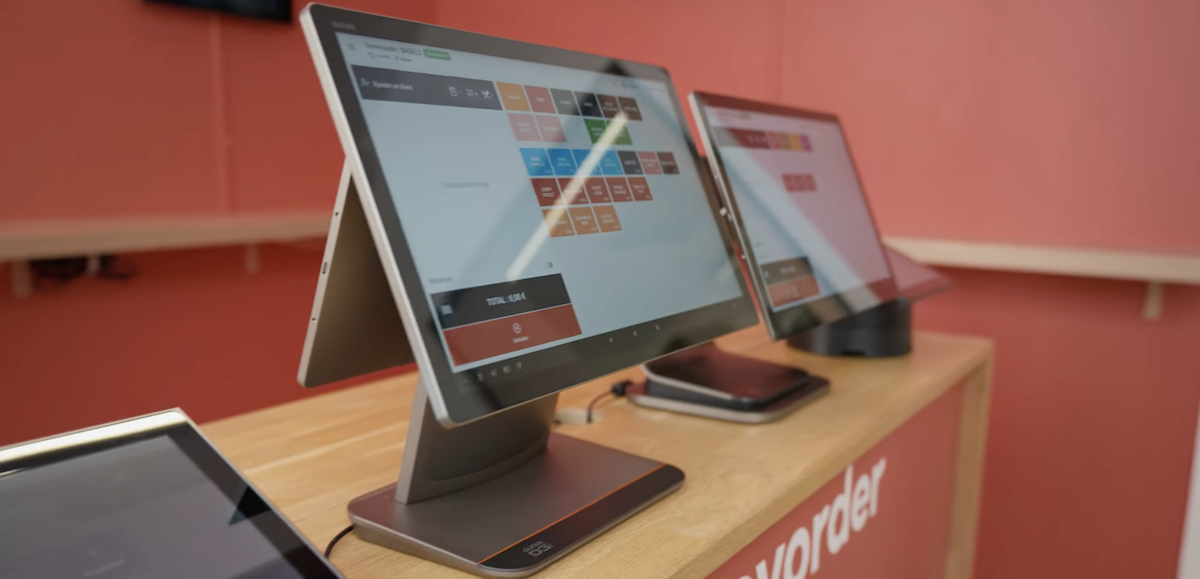
The result: instead of a unified infrastructure, the industry has ended up with a patchwork of systems. POS software on one side. A kiosk from another vendor. A click-and-collect tool elsewhere. A back-office system that doesn’t communicate with any of the three. Dozens of vendors, each excellent at their specific function, but no one responsible for ensuring the system works together as a whole. The restaurant owner, meanwhile, finds themselves playing the role of a systems integrator—a job that isn’t theirs to do.
Why now?
Three things changed at the same time, and it is their combination that opens the window.
Cloud computing has come of age in the industry. What was once an abstract technical concept has become a business necessity: multi-site deployment in a matter of days, continuous updates, and unified data accessible in real time. You can’t manage a chain of a hundred restaurants with software installed at each individual location.
Payment has been integrated into the software. The traditional separation between the point-of-sale system and the payment terminal no longer makes sense. When the two become one, transaction data becomes actionable, reconciliation becomes automatic, and a whole layer of administrative friction disappears.
Above all, AI finally makes possible what we’ve been talking about for twenty years but haven’t been able to achieve: truly automating back-of-house tasks that don’t add value. Follow-ups, reconciliations, alerts, forecasting. Not just demo gimmicks: agents that handle repetitive work and free up time for teams.
None of these three forces was sufficient on its own. Together, they render the tool-stacking model obsolete.
The real divide: platform vs. stack
We often hear people contrast “tech-enabled” restaurants with those that aren’t. This is a false dichotomy. Virtually all major chains are heavily equipped with technology. The problem isn’t the lack of technology; it’s its fragmentation.
The real dividing line today lies between two models. On one side, the “stack” approach: piling specialized tools on top of one another and hoping they’ll work together. On the other, infrastructure: a unified foundation, designed as such from the outset. And a catering infrastructure worthy of the name must meet three non-negotiable requirements.
- It’s all integrated. Ordertaking , payment processing, kitchen operations, management, and customer loyalty aren’t five separate software programs that need to be connected. It’s a single system, a single set of data, and a single workflow.
- It is open. No platform can—or should—do everything. Its strength lies in its ability to orchestrate an ecosystem of partners, not in its closed nature. Unification must never become isolation.
- It’s AI-first. AI isn’t just a feature tacked on at the end of the process. It’s an architectural approach that must permeate every module and fundamentally rethink how work is organized in a restaurant.
These three requirements are not a list of features. They are a definition. And it is by this standard that we will judge, in the years to come, what constitutes infrastructure and what will remain just another tool to plug in.
Our role in all of this
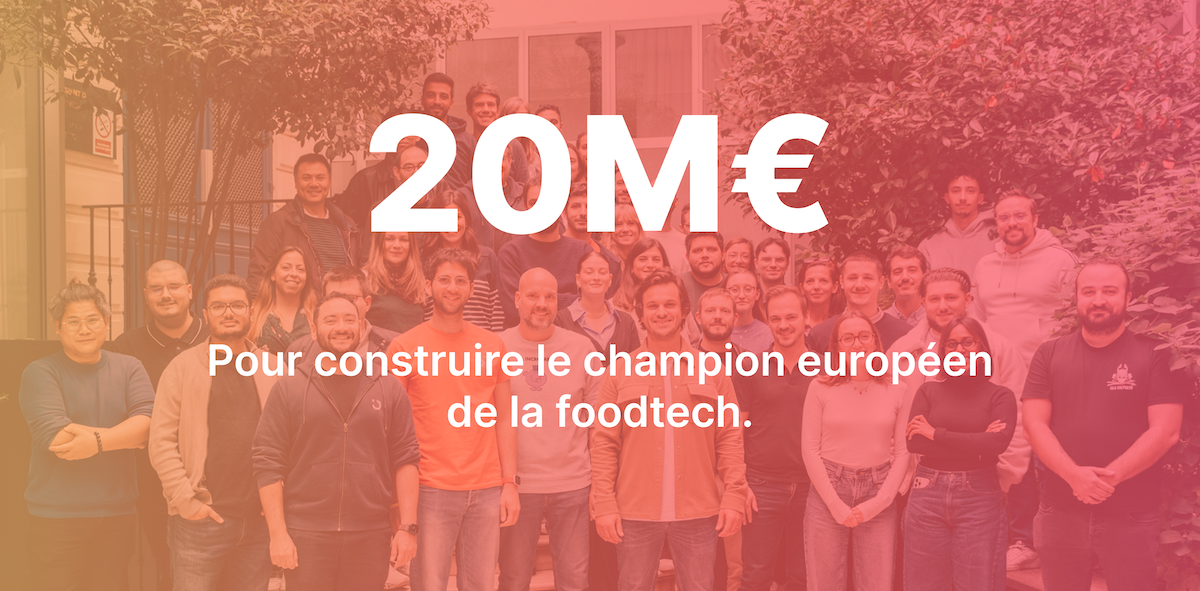
We have held this conviction since 2014. We have spent twelve years building this foundation, module by module, rather than chasing the latest trends. We have just raised 20 million euros to accelerate our growth in France and across Europe.
But what is at stake goes far beyond a single company. An industry that is essential to the daily lives of millions of people deserves better than a patchwork of legacy tools. It deserves an infrastructure. We intend to help build it alongside our customers, our partners, the talented individuals who want to get involved, and everyone in this industry who agrees that the time has come.
Restaurant owners should only have to worry about their craft: welcoming guests, serving them, and cooking. Everything else should just run smoothly. That’s not the case yet. It will be our job to make it happen.
Jérôme Varnier, CEO and co-founder of Innovorder